The monsoon session was adjourned nearly three months ago. Now, with winter already settling in and the winter session having been due, the government has recalled the House for a single day on the thirtieth. The stated business is “essential.” The real business is the delimitation bill, resurrected after its earlier iteration failed in April, now cobbled together with a fresh promise of a uniform fifty per cent increase in Lok Sabha seats for every state and a freeze on proportional shares until 2051. The opposition knows the numbers. It knows the notice period is a fiction, that the government would not be recalling the House unless it had already counted the votes, that no procedural objection will be entertained, and that the courts are not a realistic avenue. The only variable left is how many opposition MPs will be available to vote against it, and how many will be otherwise engaged.
The arguments against the bill are well rehearsed and largely true. The promise of a uniform fifty per cent increase is offered as a concession to federal concerns: every state gets more MPs, none loses its proportional share. But the concession is structural sleight of hand. The delimitation commission that would redraw boundaries is not a neutral body. The recent exercises in Kashmir and Assam offer the template. In Assam, the 2023 delimitation redrew internal boundaries without changing the assembly’s total strength, and estimates suggest Muslim-majority constituencies fell from roughly thirty to twenty-two, while ST and SC reserved seats increased. In Kashmir, the assembly’s strength was fixed at 114, with twenty-four seats kept permanently vacant for territory outside India’s control—a constitutional fiction that embeds a territorial claim into the machinery of representation. The opposition knows what a national delimitation commission would do because it has watched the rehearsals. It would be the largest exercise in electoral engineering in the history of representative democracy, conducted by a body whose members are appointed by the central government, whose orders cannot be challenged in court, and whose mandate includes the reservation of one-third of seats for women—roughly 272 seats—with the government deciding, at least initially, which seats those would be.
The women’s reservation component deserves particular scrutiny, not because reservation is inherently suspect, but because of how it interacts with the other mechanisms. If 272 seats are reserved for women, and the government determines which constituencies are designated as reserved in the first rotation, the strategic logic is obvious: difficult seats become reserved seats. Muslim-majority constituencies become SC seats. The incumbent’s vulnerable MPs are protected by the rotation’s design. Add to this the expansion of the House to as many as 850 members, and the market for horse-trading becomes not merely larger but transformative. The iron law of oligarchy operates through party tickets: a handful of leaders control access to candidacy, and the rest are token members sponsored through the system. With 543 seats, perhaps 400 MPs function as spare change. With 850, there are some 700. The availability of so many potential defectors makes party strength a secondary consideration. The allegations that opposition MPs have been offered inducements are not necessary to believe; the structural incentive is sufficient.
And yet all of this, however true, is the wrong thing to spend time proving. The arguments that delimitation is the final blow to democracy and federalism are correct, and they are irrelevant. Correctness is not a currency in a legislature where the government has the numbers, and irrelevance is the fate of every truth that cannot be enforced.
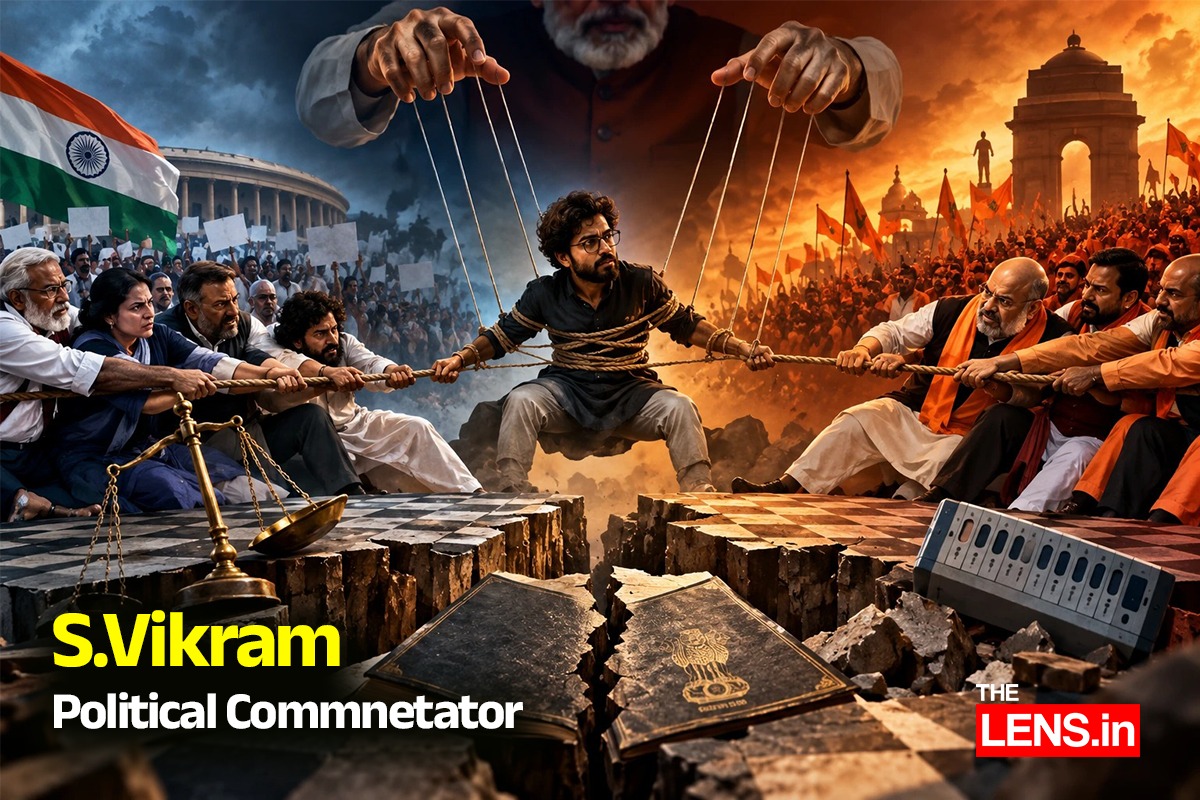
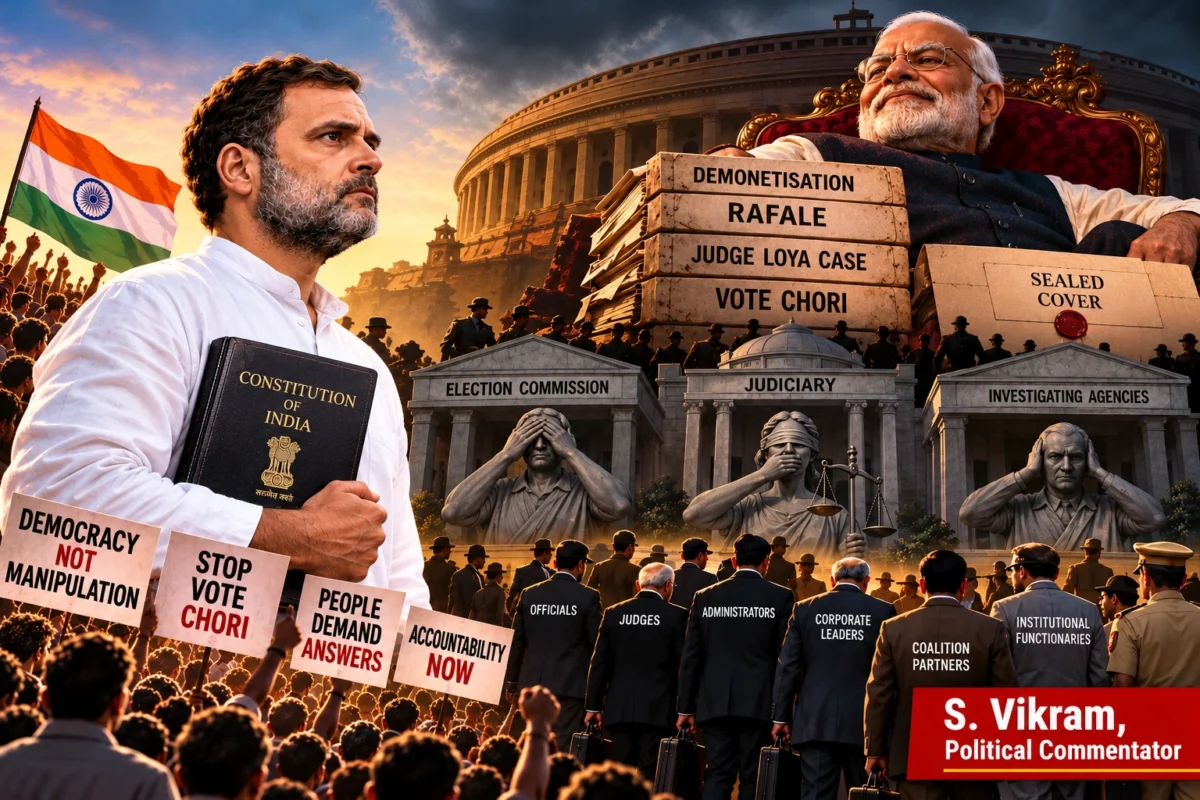
The opposition’s task is not to defeat this bill. It cannot. The opposition’s task is not to persuade the government’s supporters of their error. It cannot. The opposition’s task is to make the regime a liability to the people whose shame it depends upon—the supporters who still require a minimum of plausibility, who still need to believe that what is happening is not what is happening.
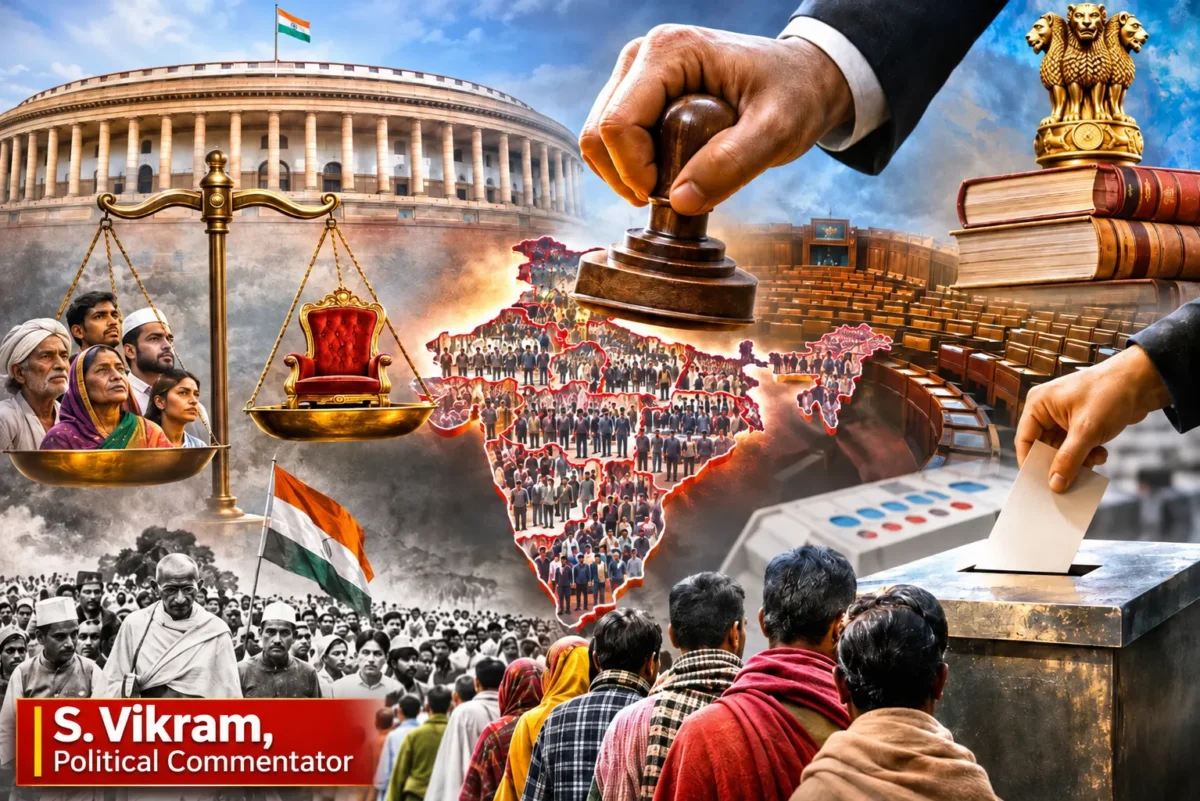
This is where the historical parallel becomes useful, and it is not the one usually invoked. The Congress of 1920 to 1947 did not spend three decades attempting to win arguments within the British constitutional framework. It did not file petitions and await judgments. It understood, after Amritsar and after the failure of the early constitutional experiments, that the Raj could not be reformed from within because the Raj’s legitimacy was not derived from Indian consent. The task was twofold: movements to evict the British, and a blueprint to rebuild the polity that would replace them. The first was negative, the second constructive. The movements—non-cooperation, civil disobedience, quit India—were not designed to persuade the British to be better. They were designed to make British rule unworkable and to expose, before the world and before the Indian people, the hollowness of the Raj’s claims to legitimacy. The blueprints—the Nehru Report, the Karachi Resolution, the committees and subcommittees that drafted the future constitution—were not academic exercises. They were proofs that the alternative existed, that the movement was not mere negation.
The opposition today faces a structurally similar task, though the asymmetry of power is different in kind. The government controls the election machinery after the Special Intensive Revision that excluded over 133 million names from the rolls, disproportionately the poor, the marginalised, and minorities. It controls the agencies of coercion. It controls the calendar of the House. It will control the delimitation commission. The electoral battlefield is not level; it is not even a battlefield in any meaningful sense. The 2029 elections, whenever they come, will be conducted under rules and rolls designed by the incumbent. The opposition cannot win that contest by playing the incumbent’s game.
What it can do is refuse to treat the game as legitimate. This does not mean abstaining from Parliament or abandoning electoral politics. It means reorienting political activity toward the two tasks the Congress understood: exposure and construction. Exposure means using every forum—the House, the streets, the courts where possible, the international press—to document what is being done and to whom. Not to persuade the government, but to ensure that the record exists, that the shame cannot be laundered into silence. Construction means producing the blueprint: what a democratic polity would look like after this regime, how representation would be restored, how federalism would be rebuilt, how the machinery of elections would be made independent again. The opposition has think tanks, lawyers, former officials, and intellectuals. It has no excuse for the absence of a serious, detailed, publicly available plan for reconstruction.
The fastidious ideological commitment of opposition MPs is not something the polity has ever expected. Indian politics has always run on patronage, on transactional loyalty, on the practical arithmetic of survival. To expect MPs to resist the inducements available to them is to expect a virtue that the system has never cultivated. But the task does not require virtue. It requires clarity. The bill will pass. The delimitation will proceed, though it will take years—the commission will need hearings across four thousand assembly constituencies, thousands of orders, a process that will likely stretch toward the next general election. The elections under the new rules may already be decided. The question is not whether the regime can be defeated at the polls. It cannot. The question is whether, when the moment of rupture comes—as it always does, eventually—there exists a coherent alternative that people can turn to, or whether the opposition will have spent its time fighting battles it knew it would lose, on terrain chosen by the other side, with weapons designed to fail.
The Congress of the 1920s and 1930s did not have the vote. It had the capacity to make the Raj’s illegitimacy visible and to prepare the ground for what would come after. The opposition today has the vote, and it has lost it. What it still has is the platform and the obligation. Everything else is a drain.