I. Three days in September
In three days this September, the Indian republic showed its condition more plainly than any single scandal of the past decade.
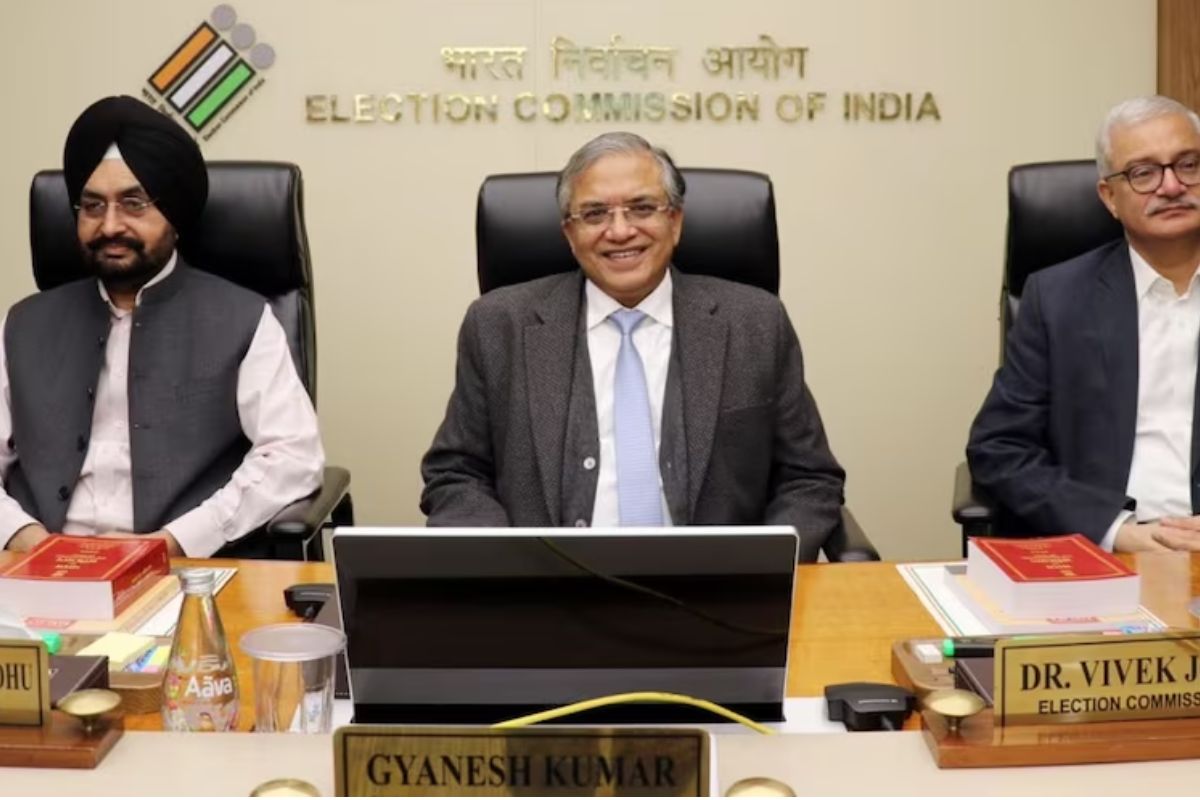
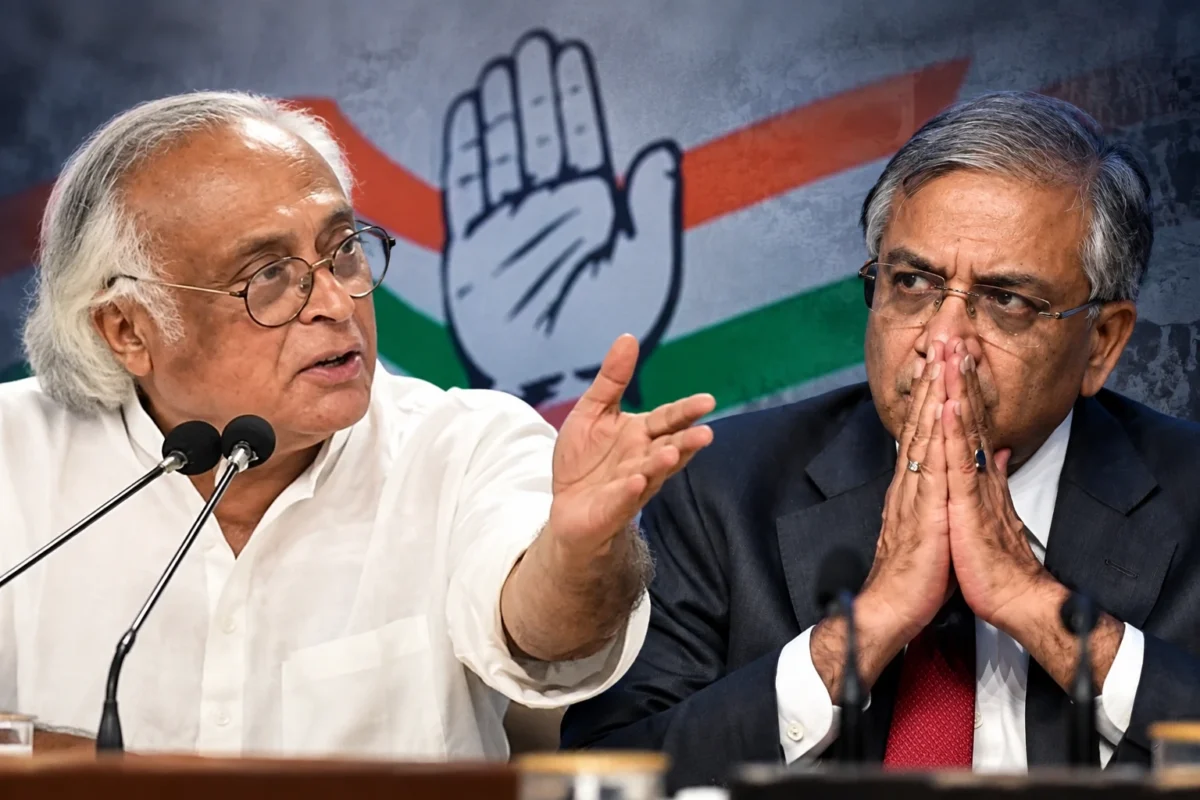
On September 23, the Indian Express reported that two of India’s three Election Commissioners, Sukhbir Singh Sandhu and Vivek Joshi, had recorded written objections at least fourteen times in ten months to the way their own Commission was being run. On September 24, a petition by the Chief Election Commissioner’s daughter, the District Magistrate of Gautam Buddh Nagar, was listed before a Supreme Court bench that did not hold the roster for preventive detention matters. That bench stayed the High Court’s strictures against her and the compensation she had been ordered to pay personally. The stay was narrowed within hours, after a legal news site pointed out the irregularity. On September 26, all three Commissioners met and issued a joint press note stating that all Special Intensive Revision orders were issued after approval from all three Election Commissioners.
The first day showed the arbiter of our elections acting against its own majority. The second showed the highest court being flexible about the roster where that arbiter’s family was concerned. The third showed the two dissenting Commissioners signing a statement that denied the dissent they had recorded. By the end of the week, the last internal check on the Election Commission had not so much broken as been absorbed.
This essay argues that these three days did not begin in September 2026 and will not end with the removal of one Chief Election Commissioner. They are the latest stage of a process that began in 2011. Where the process ends depends on a question Gandhi posed in 1909: what seed are we planting?
II. What the files say
The record is specific, and that is its strength.
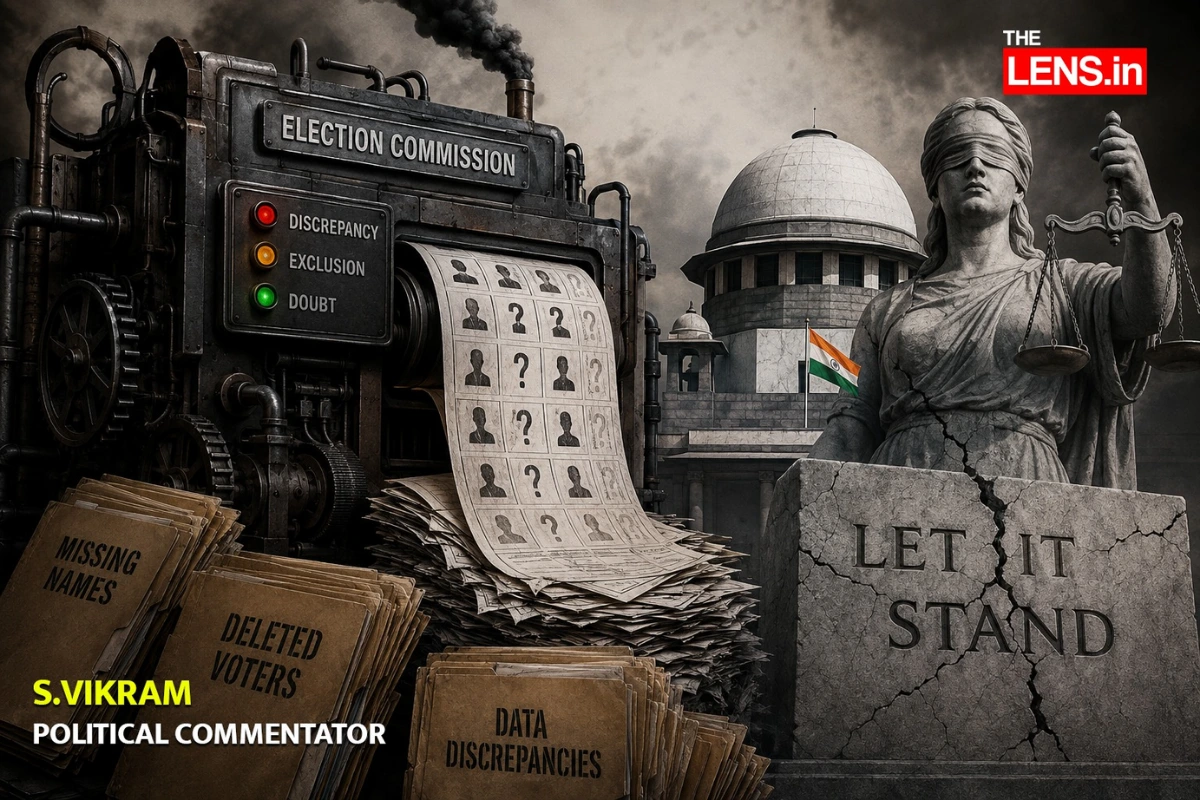
The Representation of the People Act, 1950 gives the Electoral Registration Officer (ERO), a named statutory official in each constituency, the power to decide who is on the electoral roll and who is off. From January 2026, those decisions ran through ECINet, the Commission’s integrated digital platform, whose permissions were controlled by its IT directorate in Delhi. From November 2025, the Commissioners objected that statutory functions must stay with the officers the law designates, and that IT systems must not restrict them. In May 2026, Joshi warned of the “gradual centralisation of the electoral roll database” and proposed an independent audit to certify that only statutory authorities could alter voter data. The audit did not take place. In Goa, EROs could not restore ninety-seven voters they had found eligible, because the software had no option to restore them. The law gave the decision to the officer, and the software prevented him from carrying it out.
On July 28, a Senior Deputy Election Commissioner reallocated the Commission’s internal work, removing the Deputy Election Commissioner who oversaw the IT division from that role. The next day, both Commissioners wrote separately to the Cabinet Secretary, which had never happened before. The day after that, they jointly set the order aside. On August 19, the Commission proposed that the same Deputy Commissioner be repatriated to his cadre “on personal grounds,” and the Department of Personnel approved it on August 24. In July, Form 6, the application every new voter files, had been amended to ask whether the applicant, a parent or a grandparent appeared on the last intensive revision roll. Sandhu called this “unauthorised and illegal.” The forms are prescribed by the Registration of Electors Rules, which only the Union government can amend and which are laid before Parliament.
Three illegalities are involved, and each is serious on its own. First, the Commission is a collegiate body, in which the Chief Election Commissioner is first among equals, as the Supreme Court held in Seshan. The statute requires business to be allocated by unanimity and decided by majority, and here decisions were taken against a recorded majority. Second, the ERO’s quasi-judicial function was made subject to software run by officials who had no statutory authority over it. That is decision under dictation, built into code. Third, a statutory form was altered by a body that had no power to alter it. A single line of doctrine connects the three. In Mohinder Singh Gill, the Supreme Court held that the Commission’s plenary power under Article 324 operates only where Parliament has been silent, and gives way wherever Parliament has spoken. In each instance, Parliament had spoken, and the Commission overrode it.
III. Allegation before confirmation
The chronology needs careful reading, because the regime’s defenders will read it carefully.
The allegations came first. On August 1, 2025, Rahul Gandhi warned that officials of the Commission, from top to bottom, would be held accountable, and called their conduct treason.
On August 7 he presented the Mahadevapura data. On September 18 he presented Aland, in Karnataka, where over six thousand fraudulent deletion applications had been filed in December 2022, and he alleged that names were being added and deleted through centralised systems. The Commission’s reply rested entirely on the ERO: no name could be deleted without the local officer’s scrutiny and a hearing. Aland seemed to prove the point. The ERO found only twenty-four of the six thousand applications genuine, and a Special Investigation Team later charged a former BJP legislator, tracing the fraud to a paid operation abusing the public portal, not to any central system.
The first recorded internal objection came about seven weeks later. It said that the ERO’s statutory authority, the safeguard on which the Commission had just rested its defence, must not be restricted by the centre. The Commission’s public answer depended on a safeguard its own members were saying was being eroded.
The record doesn’t prove what it can’t. It says nothing directly about the Lok Sabha election of 2024. It doesn’t explain the Maharashtra rolls, which grew by over forty lakh names between the general and assembly elections of that year. Aland was a crime committed through the front end of the system, not through capture of its core. Those who treat the September documents as proof that every election since 2014 was stolen will hand the regime the easiest possible rebuttal.
What the record does establish is more damaging. The Commission refused the opposition machine-readable rolls. It responded slowly to a state police investigation that wrote to it repeatedly for technical data. It ignored its own members’ demand for an audit. It overrode its own majority. An arbiter that refuses every form of verification cannot claim a presumption of fairness. The burden has shifted. The opposition doesn’t need to prove each election was rigged. The Commission must show that it was not, and it has refused to let anyone check.
IV. The long decade
The Commission’s collapse is the end of a longer story, not the story itself.
In 2011, the Comptroller and Auditor General produced a notional loss figure of ₹1.76 lakh crore in the allocation of 2G spectrum. That number, together with the anti-corruption movement that grew around it, destroyed the credibility of a government and then of the whole opposition. The documented outcomes are worth recording plainly. In December 2017, a special CBI court acquitted every accused in the 2G case for want of evidence. In 2021, Vinod Rai, the CAG who produced the figure, apologised to Sanjay Nirupam for a false claim he had made about him. Prashant Bhushan, one of the leaders of India Against Corruption, later said that the movement had been backed by the RSS and BJP, and expressed regret for his part in it. The founding scandal of the era ended in acquittal, and its most visible movement was later described by one of its own leaders as having been propped up.
There is no need to argue for a single conspirator directing all of this. Convergence explains it, and it is harder to rebut. The Sangh, after nearly a century of waiting, had reason for urgency: Hemant Karkare’s investigations into Malegaon and related bombings had brought individuals from its ideological world into the dock. A television news ecosystem, soon concentrated in the hands of business groups (Reliance took control of Network18 in 2014; Adani took over NDTV in 2022), needed spectacle. An anti-corruption movement needed a villain. An ambitious constitutional auditor supplied a number. Their interests pointed the same way.
The campaign that followed intensified in stages: from corruption to dynasty, from dynasty to elitism, and from elitism to civilisational enmity. It brought large returns in power and large costs to society. The facts built up anyway. There was the death of Judge Loya. There was the Pegasus list, on which the number Ashok Lavasa used in 2019 appeared weeks after he dissented in five separate cases on alleged Model Code violations by the Prime Minister and the Home Minister. Forensic reports found files planted on the computer of an accused in the Bhima Koregaon case. Elected governments were brought down in Uttarakhand, Goa, Madhya Pradesh and Maharashtra. An Express analysis found that of twenty-five opposition politicians facing investigations who crossed over to the ruling party, twenty-three received relief. The cases arising from Karkare’s investigations ended in acquittals: Mecca Masjid in 2018, Samjhauta in 2019, Malegaon in 2025.
Each of these could have produced a reckoning, and none did. The regime paid for each misconduct with credibility borrowed from an institution. The CAG’s credibility paid for 2011. The courts’ credibility paid for Loya and the acquittals. The investigative agencies’ credibility paid for the opposition politicians who switched sides. The Election Commission’s credibility paid for the rolls. It was a Ponzi scheme of legitimacy: old debts of credibility repaid with new deposits drawn from the next institution. A Ponzi scheme ends when there are no new depositors. On September 26, the Commission paid again with the Supreme Court’s credibility. It reminded people that the changes in Form 6, through which names are included in the voters’ list, have been upheld by the Supreme Court, citing an order of May 27, 2026. But the Form 6 change, according to the Express chronology, came in July, a month and a half after the Supreme Court order. If that is right, the Commission is claiming judicial approval for a change the Court never saw. And the institution it now relies on is the same one whose listing of the Chief Election Commissioner’s daughter’s case was questioned two days earlier. The credit is exhausted.
The misuse of history produced its own backlash. A regime that rewrote the nation’s past to delegitimise its opponents found that its own past, from Malegaon to the 2G acquittals, came back to be read. The damage to institutional credibility has been gradual and cumulative. We now stand where the credibility of the entire institutional structure has given way, and the polity has turned into an absurdity: elections are held, but their arbiter can’t be trusted; courts sit, but their rosters are flexible; the press publishes, and nothing follows.
V. Entrustment, not spoils
Why does the arbiter matter so much? Because democracy doesn’t rest on the majority asserting its victory. It rests on the minority accepting it.
An election is a test, not the purpose of politics. It is not a war that hands spoils to the winner. It is a trust placed in the winner by the whole electorate, including those who voted against them. A mandate is a revocable trust, not a title. It can’t be based on triumphalism. Democracy exists where the loser accepts that the count was honest and believes its own turn will come. When the minority, with its leaders, parties and voters, refuses to accept a result, that result cannot function as democratic authority, whatever its merits.
1860 is the hardest case, and it shows the principle clearly. A minority with its full apparatus of leaders, state governments and electorate refused to accept Lincoln’s election. The Union was saved by war, and between 1861 and 1865 America was a nation held together by force, not a democracy. The democracy that returned was granted by the victors, and granted selectively. In 1877 the defeated South’s consent was bought by handing freed Black citizens back into the power of their former masters. A democracy can restore its losers’ consent by excluding someone else from the settlement. That warning applies directly to an intensive revision whose deletions, by every available account, have fallen hardest on Muslims, migrants and the poor.
Whether such a refusal is legitimate depends on the test Ambedkar set in his speech to the Constituent Assembly on November 25, 1949: where constitutional methods are open, unconstitutional methods have no justification. The corollary is the one that matters now. When constitutional methods are closed, refusal is justified.
VI. The closing of the channels
So are they closed?
Accountability in our system runs through five channels. The executive provides administrative accountability, the statute provides legal accountability, Parliament provides accountability through the opposition, the courts provide judicial accountability, and the media provides public accountability. They are designed to feed into each other. The press produces facts, the opposition turns them into parliamentary motions, the courts turn them into orders, the statute supplies the standard, and the executive enforces.
The executive is conflicted. It received two letters from constitutional functionaries and did nothing that is on record, except approve the repatriation of the officer the two Commissioners had defended. Parliament is closed by numbers and by the discretion of the Chair. A removal motion against the Chief Election Commissioner can’t pass, and the Chair can refuse to admit it. The statute protects the Commissioners from proceedings for acts done in discharge of official duty, and no court has yet decided whether acts outside statutory authority count. The Supreme Court’s roster answers to no one but the Chief Justice, a problem four senior judges exposed in January 2018 and that the institution resolved by confirming the doctrine.
There was one further channel, inside the Commission itself: its majority. It worked once, on July 30, when the two Commissioners set aside the order sidelining the IT oversight. On September 26 it closed. The press note was issued with the approval of the full Commission, and it stated that the letters to the Cabinet Secretary were not related to any policy matter of the EC or its IT division, but to the working of an officer on deputation. The two Commissioners whose notes had recorded illegality signed a document declaring unanimity. Whatever they wrote in the files, their public position is now the Chief Election Commissioner’s. Their dissent turned out to be a private conscience that never became public action.
The note is worth reading closely, because it shows how the regime operates. It denies nothing, and it concedes a great deal. It states that the Commission today ordered that agendas and minutes be circulated henceforth, which quietly concedes Joshi’s complaint that there had been none. “For the non-SIR period, the Forms applicable as per Rules (the Registration of Electors Rules 1960) will be used,” which quietly concedes the statutory point. A committee headed by a Senior Deputy Election Commissioner and including an independent expert from IIT/IITs will review ECINet, which is Joshi’s audit in weakened form, placed under the authority of the very office that tried to remove the oversight. Everything is corrected, and nothing is admitted.
Election Commission’s bid at damage control raises more questions +2
A regime born of propaganda can concede substance but can’t concede the narrative, because the narrative is its foundation. This is contempt for public anger, repudiation of public trust, and a decision to brazen it out. It is also a mark of the regime’s character: it retreats where it must, but it will never say that it was wrong.
VII. The question of transfer
This raises the most dangerous question in Indian politics: would a regime that brazens out even this hand over power peacefully?
The evidence runs both ways. The regime has accepted defeat where it came: in Karnataka, Himachal, Telangana, Jharkhand and Jammu and Kashmir, and in the loss of its Lok Sabha majority in 2024. What has never been tested is a national defeat, a general election lost and certified by an arbiter the regime controls. The concern is not about the regime’s behaviour in general. It is specific: would the arbiter record and accept the one loss that matters? After September 26, no one can answer that with confidence. When the fairness of the next general election depends on the regime’s restraint rather than on rules, democracy has become a concession, and a concession can be withdrawn.
If the constitutional channels close and the transfer of power becomes doubtful, the likely result is mass upheaval. Here the neighbouring countries are the wrong guide. Nepal, Bangladesh and Sri Lanka are smaller polities where a mass movement can form in weeks, and their regimes had nothing like the organised depth of the RSS. In India, a movement would take enormous political effort, state by state and language by language, and it would face a mass organisation embedded in society and the bureaucracy as well as a state. And there is a deeper fear: if power changes hands unconstitutionally, what follows won’t be constitutional either. That is how prolonged anarchy begins.
VIII. The seed and the tree
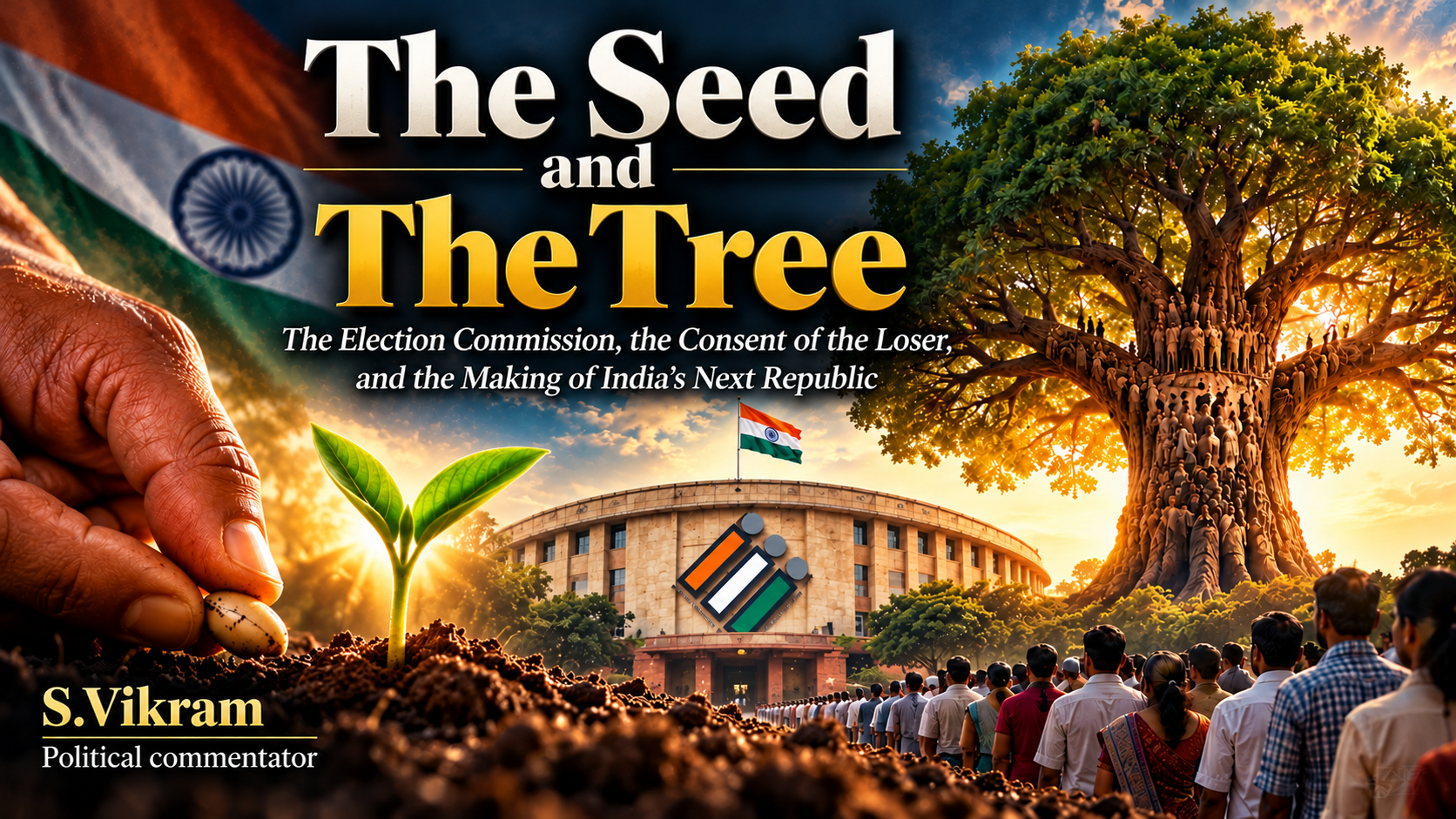
Gandhi answered this in 1909. In the chapter of Hind Swaraj on brute force, he wrote that the means are to the end as the seed is to the tree. The character of a government is set by the way it comes to power.
The principle explains the present. A regime that came to power through manufactured belief must survive through manufactured belief. It can’t govern through actual consent, because it never had it. That is why every institution had to be enlisted to produce credibility, and why credibility had to be borrowed until none was left.
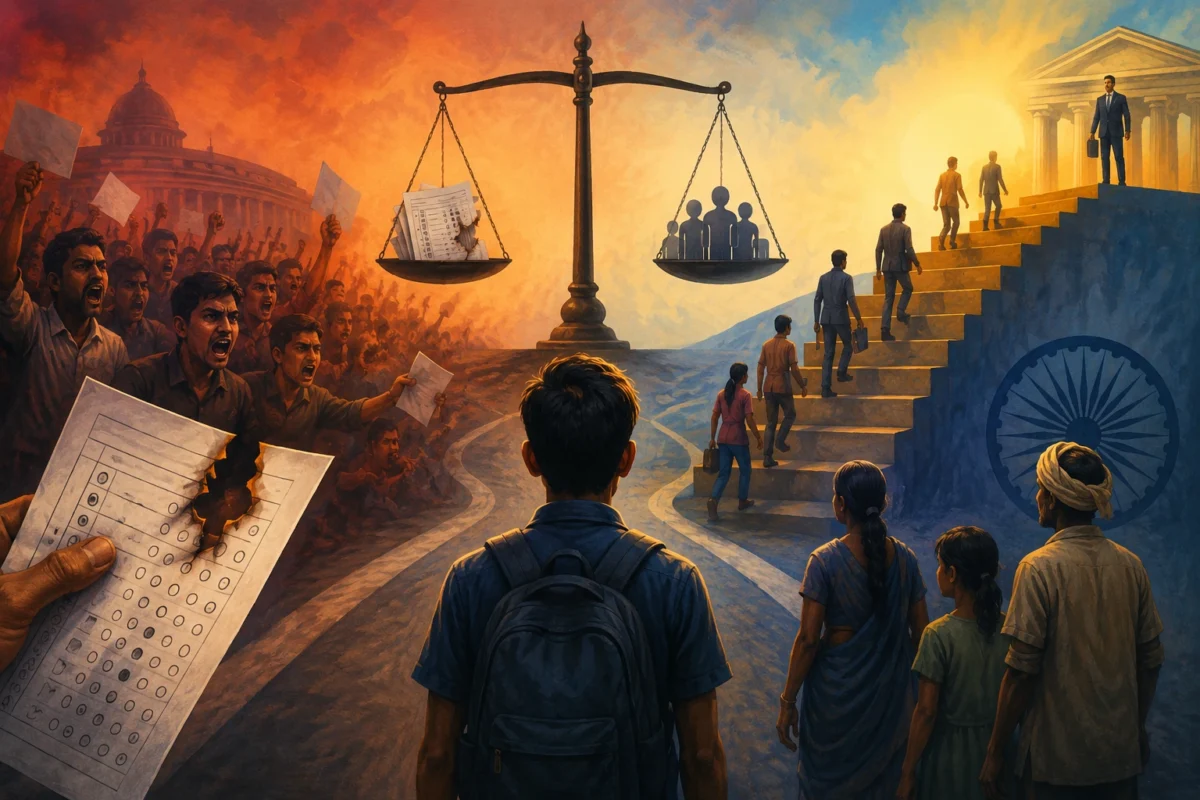
Followed carefully, the same principle also shows the way out, and it doesn’t lead to anarchy. Gandhi didn’t say that power gained through popular upheaval produces disorder. He said the character of the upheaval determines the character of the government. A violent uprising grows into a violent state; a nonviolent mass movement grows into a popular, nonviolent one. The Indian national movement was itself a mass upheaval, and it produced a constitutional republic. It could do so because it had spent decades building the constitution before it came to power: the Nehru Report of 1928, the Karachi Resolution on fundamental rights in 1931, and years of internal elections, sessions and resolutions inside the Congress. The seed of the republic was planted in the way the movement conducted itself. When power came, there was something ready to receive it.
That is why India’s scale, the reason the neighbours are the wrong comparison, is also a protection. A movement that has to be built across a continent can’t be a spontaneous crowd. It has to develop organisation, leadership, rules and a programme as it grows. The effort of building it gives it the depth that prevents anarchy. The shallow uprisings of smaller polities leave vacuums. A deep movement produces institutions.
The real danger lies elsewhere: in the confrontation between two organised forces. In Colombo and Dhaka, the uprising faced a state. In India, it would face a state together with a mass organisation able to mobilise against it. Anarchy would come from street against street. Here Gandhian nonviolence stops being only ethics and becomes a strategic necessity. An organised counter-movement gains legitimacy only if the movement it opposes turns violent. Nonviolence denies the Sangh the one thing that would let it present its mobilisation as defence of order.
IX. The warning of 1977
India has done this once before, and the lesson cuts both ways.
The JP movement was largely nonviolent. It forced an election, won it, and saw power handed over peacefully. That is the proof that an entrenched regime can be displaced constitutionally in India. But the Janata government fell apart within two and a half years, and the seed and the tree explain that too. A movement united only by opposition to Indira Gandhi produced a government held together only by that opposition, which fragmented once the common enemy was gone. A movement united only against Gyanesh Kumar, against the intensive revision, or against the regime would produce the same kind of government. Opposition alone yields a government of opposition alone.
X. A constructive programme for the republic
Gandhi’s answer to that problem was the Constructive Programme. He held that swaraj isn’t won at the moment power changes hands. It is built beforehand, in the work of the movement itself, which practises now the relationships the future state will need. Applied to the present, the movement’s first task is to build now the democratic contract it wants to restore. That has four parts.
First, it should state its terms. The opposition can refuse to recognise this arbiter without walking away from democracy. It can formally declare no confidence in the Commission, while continuing to contest elections as the rightful claimant, not a subordinate participant. The demand changes from “we reject the results” to “we reject this arbiter, and here are the terms on which we will accept one.” The terms can be stated precisely:
an appointment process for Election Commissioners that restores a neutral member to the selection committee, as the Supreme Court directed in Anoop Baranwal before Parliament legislated around it;
an independent, public audit of ECINet and its access logs, not a committee under the office that sought to remove oversight;
machine-readable electoral rolls, and a published record of every deletion and its grounds; restoration and certification of the ERO’s statutory authority, so that no software can override a decision the law gives to a named officer; the question of the voting machines settled through public, independent testing rather than assurances.
Second, it should set a deadline. The next general election is due in 2029. The opposition’s position should be that it will not accept that election under this arbiter unless these terms are met. That gives the regime three years to reform. If it doesn’t, it faces a crisis of legitimacy it can’t explain away, because it will have been told in advance and in writing what consent requires.
Third, it should respect the sequence. Withdrawing consent is legitimate only when the public has watched the constitutional routes being tried and closed. So the opposition must pursue the writ petitions, the removal motion and the RTI applications fully and in public, collecting each refusal as evidence, before it escalates to non-recognition. September 26 closed one route. The record of closed routes should be built so that no one can later say the opposition refused before trying.
Fourth, it should prepare the constitutional path now. This is what matters most for the fear of anarchy. Bangladesh’s crisis began in 2011, when the incumbent abolished the caretaker system that had run its elections. After that, the losers stopped consenting, boycotts followed, and eventually an uprising produced a transition outside the constitution that remains uncertain. India has no caretaker provision. So the opposition should draft now, argue for in public, and make part of its demand the constitutional arrangement for a transition: a reconstituted Commission, rolls audited in public, an agreed election timetable, and if necessary an amendment providing interim arrangements for electoral administration. A movement that demands a Chief Election Commissioner’s removal without a plan for what comes next leads to Bangladesh. A movement that brings its own constitutional route leads to 1977, without the fragmentation that followed.
Behind all four sits the unity of purpose the opposition has so far lacked. A shared grievance is not a shared will. The regime has unity structurally: one command, one organisation, one story. The opposition must build it, and India’s precedents say how. It needs something close to a merger. It needs a grievance stated as what people lose: the vote first, then the ration card, then the citizenship the vote stood for. And it needs moral leadership from someone with no stake in office.
It also has an advantage it rarely uses. The majority’s support for what has been done is paid in the secret ballot, and the fact that it must be paid in secret shows it hasn’t lost its sense of shame. No crowd gathers to demand that its neighbours be struck off the rolls. Every retreat of the past week, from the forms restored to the stay narrowed to the minutes promised, happened under public exposure. Support that can’t defend itself in public holds in the voting booth and gives way when challenged in the open. Those who have been dispossessed have nothing to hide. Their strength is visibility, which is why the regime’s counter-strategy has always been to make them hide: to call them infiltrators, anti-nationals and traitors, and to remind every critic that a file somewhere can be opened.
XI. The seed we plant
Nobody waits for the magnanimity of a treacherous winner. But whoever carries the grievance must remember what makes it legitimate. The claim is restitution, not retaliation: the return of a trust, not the destruction of an opponent. A movement that seeks the regime’s destruction will plant the seed of another regime of destruction. A movement that seeks the restoration of consent, through nonviolent and constructive means, with its constitutional route drafted in advance, plants the seed of a republic.
September 2026 has shown what grows from a regime planted in propaganda: an arbiter that denies its own record, a court that bends its own roster, and dissenters who sign away their dissent. The choice now isn’t whether India will face upheaval, because a polity whose institutions have all lost credibility will face it in one form or another. The choice is what the coming upheaval will carry within it. Gandhi’s point applies to the next republic as it did to the first: it will grow from whatever seed is planted now