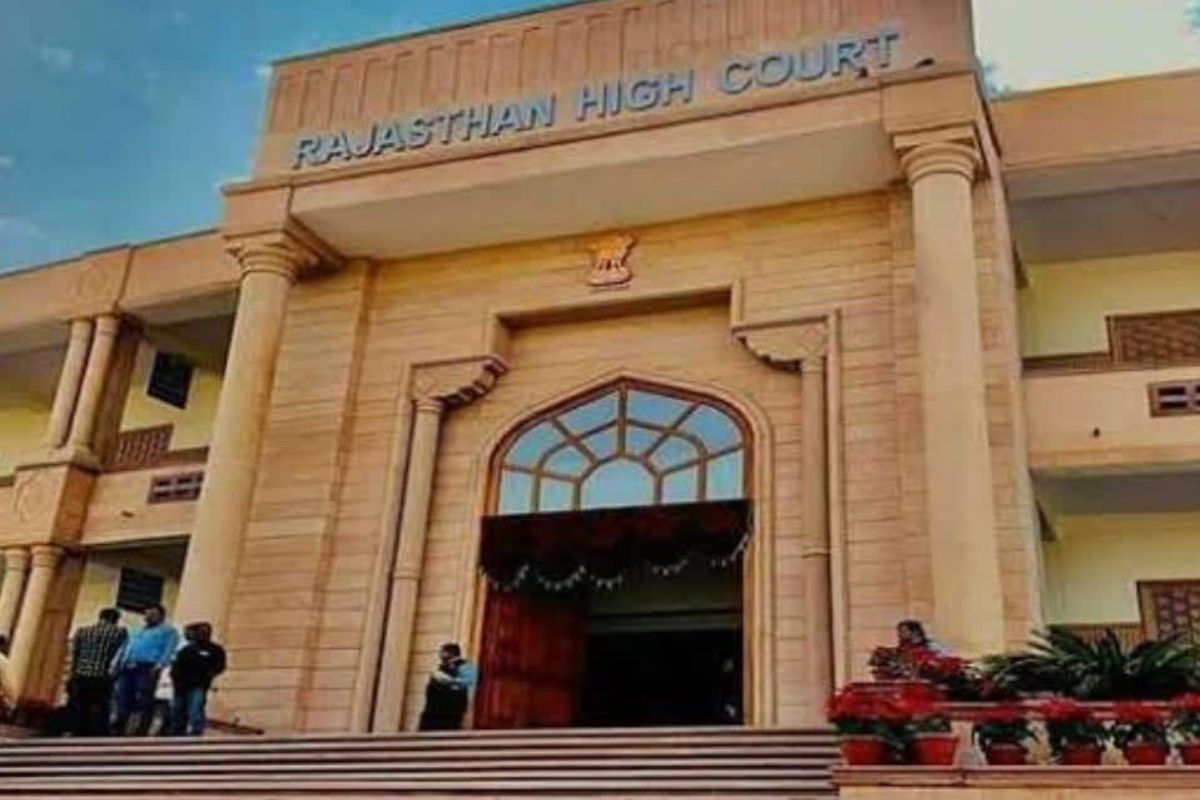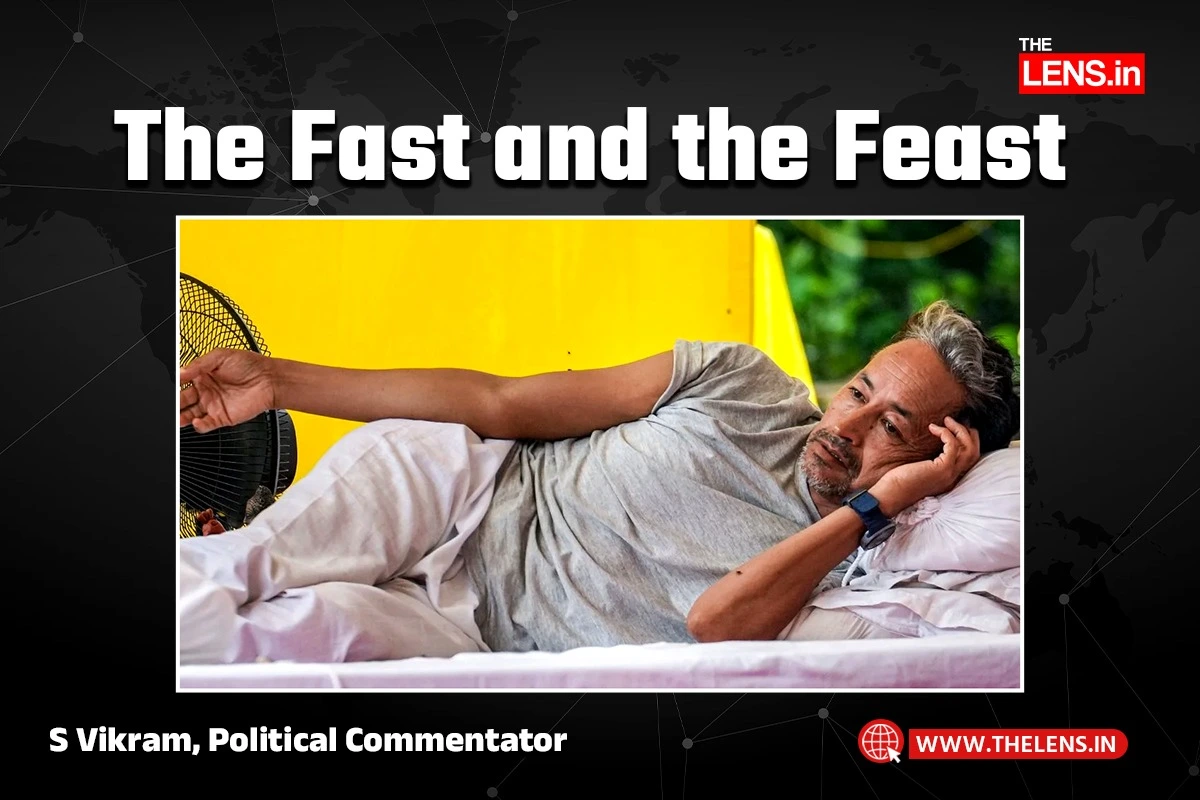
On the nineteenth day of Sonam Wangchuk’s indefinite fast at Jantar Mantar, the Delhi High Court discovered urgency. A public interest litigation filed one evening was heard the next morning; the Chief Justice observed that “the life of any citizen is precious”; government doctors were ordered to monitor the activist daily and to intervene the moment his parameters demanded it. The Solicitor General, appearing for a Union government that had not addressed a single sentence to the fasting man in three weeks, gravely concurred: every life is precious.
Set this against another ledger of the same judiciary. The habeas corpus petitions from Kashmir after August 5, 2019, went largely unheard — not dismissed, which would at least have been a decision, but unheard, adjournment functioning as adjudication. Umar Khalid enters his seventh year of incarceration without a trial having commenced, bail refused on charges perpetually “prima facie serious,” a phrase whose genius is that it never has to survive contact with evidence. The same state that finds him too dangerous for bail finds him safe enough for parole when there is a wedding or a bereavement in the family — because bail is a right, and parole is a gift, and the whole point of the exercise is to replace the first category with the second. You may have nothing as an entitlement; the sovereign may give as grace.
Now the pattern becomes legible. This judicial ecosystem will not produce the detained body from Tihar or Jodhpur, but it will seize jurisdiction overnight to keep the fasting body at Jantar Mantar fed. Habeas corpus — produce the body — has been perfectly inverted: liberty gets an adjournment, the pulse gets a bench by morning. The courts protect bare biological life and abandon the person, because the pulse makes no claim against the sovereign; it only asks to be administered. Wangchuk himself learned this arithmetic the hard way. Detained under the National Security Act after the Leh firing of September 2025 — four civilians dead, a curfew, an internet shutdown — he watched his wife’s habeas petition drift from October to December to January while the state consumed five months of his detention.
When the Home Ministry abruptly revoked the order in March, days before final arguments, it was not mercy and it was not law; it was the state finishing its meal and the court clearing the plate. Three days later, a man who had every reason to believe the judicial route was theatre stood before the press speaking of “win-win,” of “give and take,” of the government “extending a hand.” Whether or not anything was agreed in Jodhpur — and nothing needs to have been written for everything to have been understood — the March vocabulary told us what the release had cost. In a system where habeas has been hollowed out, accommodation with the executive is the only functioning writ.
Which is why the fast now underway is not a departure from the lesson of his detention but its application. A man who discovered that his rights are unenforceable, and that only his body has standing before this state, has staked the one asset the system still recognises. The tragedy is that he has staked it on a stage that was built by others, for purposes that are not entirely his, against a regime that has already demonstrated — conclusively, with a corpse — that the instrument does not work.
The demonstration was Professor G.D. Agrawal. Swami Sanand: IIT Kanpur, saffron-clad, fasting for the Ganga, the river this government garlands in every speech. He wrote to the Prime Minister personally, thrice. He fasted one hundred and eleven days and died in October 2018 without receiving a reply. Nothing in the republic’s semiotic inventory outranked that man’s claim — the renunciate, the scientist, the sacred river — and it purchased nothing, because the fast-unto-death is a technology that works only on a regime capable of shame, or an electorate that punishes shamelessness. Gandhi’s fasts moved a Raj that had a metropolitan conscience to answer to. Against a state that has outsourced its morality wholesale, the faster’s body ceases to be a moral claim and becomes a logistics problem. Agrawal established the doctrine; the shankaracharyas who cannot get a hearing confirm it; Wangchuk — Magsaysay laureate, the real Phunsukh Wangdu, the middle class’s beloved image of the constructive patriot — is now testing whether even the most bankable saffron-adjacent sainthood outside the Sangh’s own ecosystem can bind this government to anything. Nineteen days of silence are the interim finding.
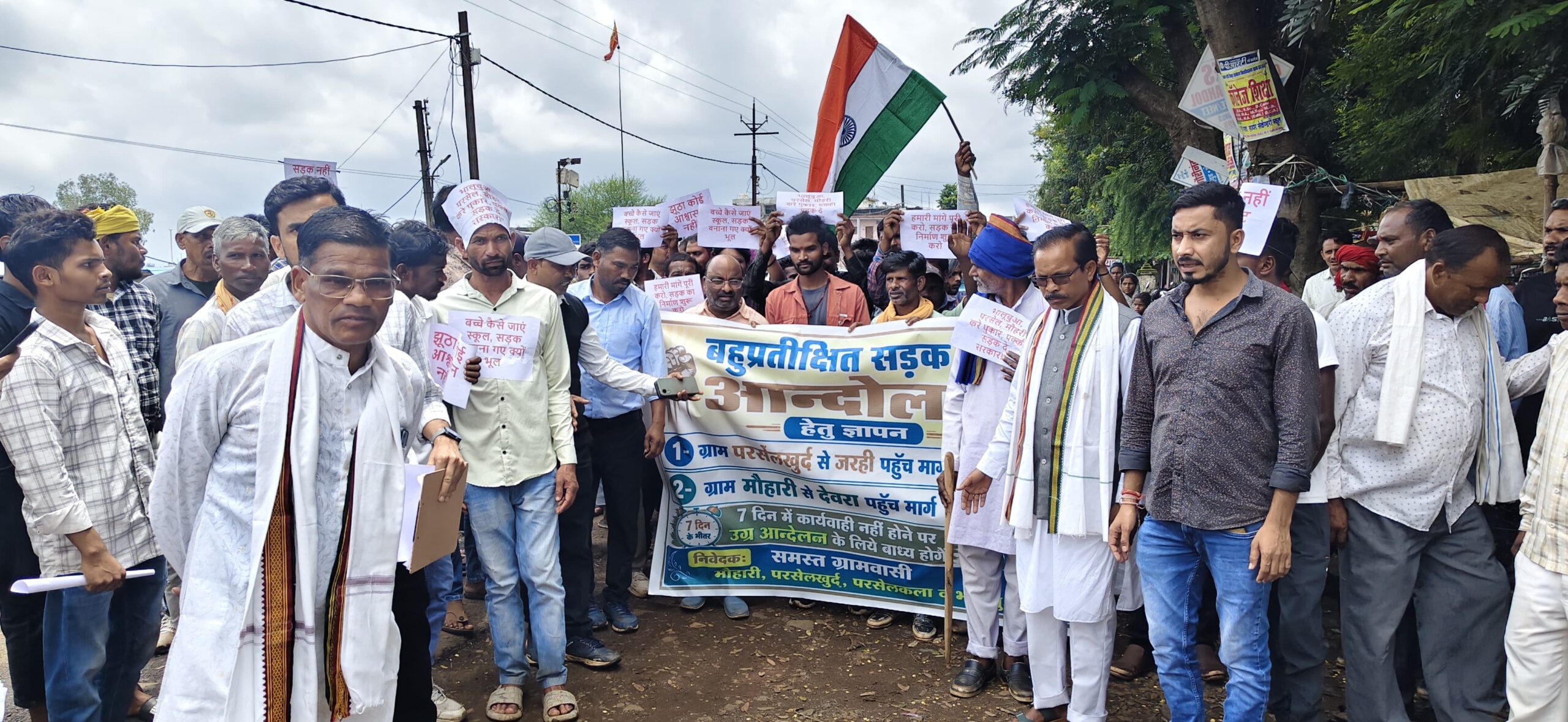
But if the government will not be shamed, it has also declined to act, and the inaction is its own text. This is a state whose police, in routine cases, lift a solitary hunger-striker on the third day and deliver him to a government ward for feeding. Here, three weeks have passed; the attempt-to-suicide provisions of the new criminal code — tailor-made, in their compel-a-public-servant clause, for exactly this situation — sit unused; and the only visible policing has been directed elsewhere: by the organisers’ account, some five hundred farmers were placed under house arrest to keep them from reaching the venue. Contain the crowd, do not touch the body.
The state learned its lesson in August 2011, when it was the arrest of Anna Hazare that detonated the movement, and it learned it again across the sixteen years of Irom Sharmila, when force-feeding manufactured a martyr-saint and changed nothing. Non-intervention is not indifference; it is a strategy of oxygen deprivation, a wager that public attention decays faster than a healthy fifty-nine-year-old body. And the High Court’s order has now installed the exit: when the moment comes, the fast will be broken by judicially sanctioned medical intervention — hospitalisation laundered through the language of preciousness — so that the government can end a satyagraha without ever acknowledging it, wearing the satyagrahi’s own ethic of life as a glove. The perfect outcome, from the state’s side of the table, is not a corpse. It is a broken fast that cost nothing and was never once addressed.
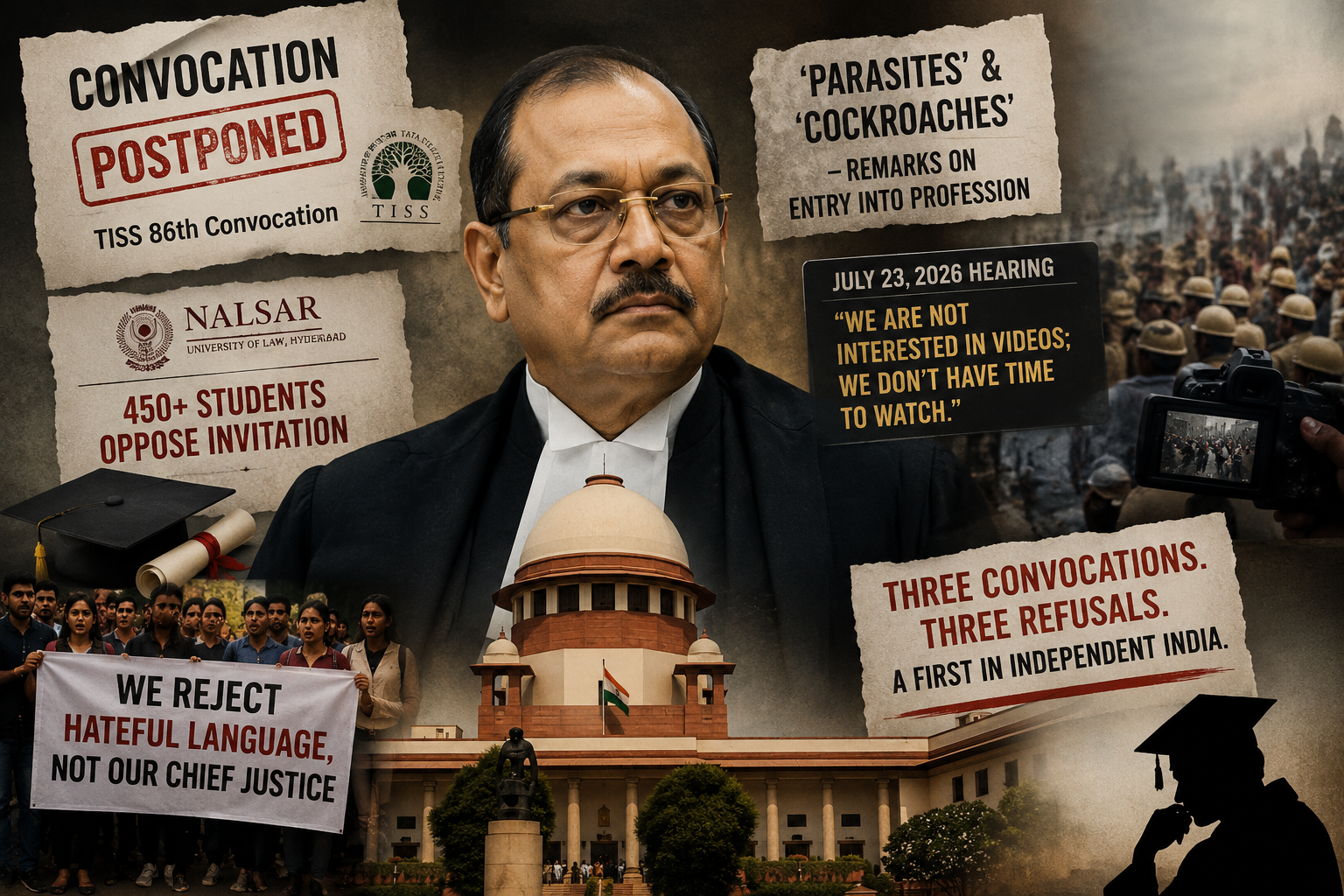
Look next at the stage itself, because the stage is doing more work than the man on it. The Cockroach Janata Party was founded only in May, an online satirical collective born of a Chief Justice’s alleged remark about unemployed youth, led by a returnee from Boston whose past association runs to Arvind Kejriwal. Its leadership announced in advance that no CJP member would join the fast — the founder cited migraines — and was filmed eating kachoris and noodles on the same stage where Wangchuk starved. This has been treated as comic hypocrisy. It is better read as a division of labour. The anonymous student fasters — an AISA president, a JNU scholar hospitalised in hypovolemic shock on day sixteen — starve invisibly; the imported saint starves famously; the platform’s owners, who do not starve at all, spend the suffering of both. Sacrifice has become a factor of production, contracted in from a specialist. And Wangchuk is a specialist: the 2024 climate fast, the Leh fasts, a portfolio of hunger patiently accumulated. When the organisers were asked why he alone fasted, the answer was disarmingly honest — he had experience. A movement that could not perform sincerity, because its entire register is ironic survival — we are cockroaches, you cannot shame us — outsourced the sincere register wholesale and kept the joke.
None of this required a conspiracy, and that is precisely what makes it worth describing. The choreography of Wangchuk’s entry — no prior affiliation, a pre-announced fast, direct occupancy of centre stage after a ceremonial visit to Rajghat — perplexes only those who have forgotten that this is the standard architecture of the post-2011 protest form. India Against Corruption was built first as apparatus, by the men who later built a party from its proceeds, and the Gandhian body was recruited last, as the component that converts content into consequence. The “apolitical” stage was never apolitical; it was a routing device, designed to seize a grievance whose natural beneficiary was an established party and to divert the dividend around it. Run the machine on the present configuration. NEET is the Congress’s best available issue: its workers took water cannons in Jaipur in May, at Kurukshetra on June 6, in Agartala on June 15, all demanding the same minister’s resignation. On June 25 the party announced a forty-day national campaign, to launch on June 30. Wangchuk began his fast on June 28. Within forty-eight hours the moral centre of gravity of the issue had been fixed at Jantar Mantar, on a stage the Congress cannot join — its lineage makes it hostile territory — and cannot ignore without seeming absent from the conscience-event of the season. Two months of water-cannoned Congress bodies were retroactively erased; the story of resistance to Pradhan now begins on the day the saint sat down. The party that fights elections has been displaced, on its own issue, by a stage that at maximum success removes one minister and dissolves. One need not decide whether the Union government arranged any of this to observe that it is the arrangement’s second-largest beneficiary.
And Wangchuk? Note, finally, what he is not fasting for. Not statehood, not the Sixth Schedule, not the four dead of Leh, not his own hundred and seventy days in Jodhpur. The one cause that defines him, the one that got him jailed, is the one conspicuously absent from his own fast-unto-death. If the March understanding had a perimeter, this fast respects it immaculately: rebellion conducted entirely inside the licensed field, on an issue that embarrasses an expendable minister rather than threatening territorial policy, in a city that can absorb the theatre as Leh cannot. Perhaps he chose the field; perhaps he was steered to it; the geometry is the same either way. Every actor on that stage — a satirical outfit needing a martyr-body, a deflated party needing its 2011 sequel, a government needing his charisma quarantined from a Chinese border, and a saint needing redemption from the vocabulary of “give and take” — privately optimised its way to the same public outcome: the fighting opposition displaced by a dying conscience, and the dying conscience kept alive, barely and deniably, by court order. When every incentive converges on one result, the system produces the effect of a conspiracy without needing an author. That is worse than a conspiracy. A conspiracy can be exposed; an alignment can only be survived.
Two dates will tell us the rest. On July 20, the movement marches on Parliament as the Monsoon Session opens: watch whether the police who house-arrest farmers wave it through, and learn where the boundary of tolerable theatre has been drawn. On August 9, the Congress attempts its Delhi Chalo into a city where the story may already be over. Between those dates, in all likelihood, a bench will read a doctor’s bulletin and order the feeding of a man the government never spoke to. The fast will end; the minister will remain; the conscience of the nation will be pronounced awakened. And somewhere in the files, the doctrine first written in Swami Sanand’s death will acquire its second citation: in the republic of the shameless, the hunger of the just is not a weapon. It is a spectacle, jointly produced, and everyone eats except the man on stage.