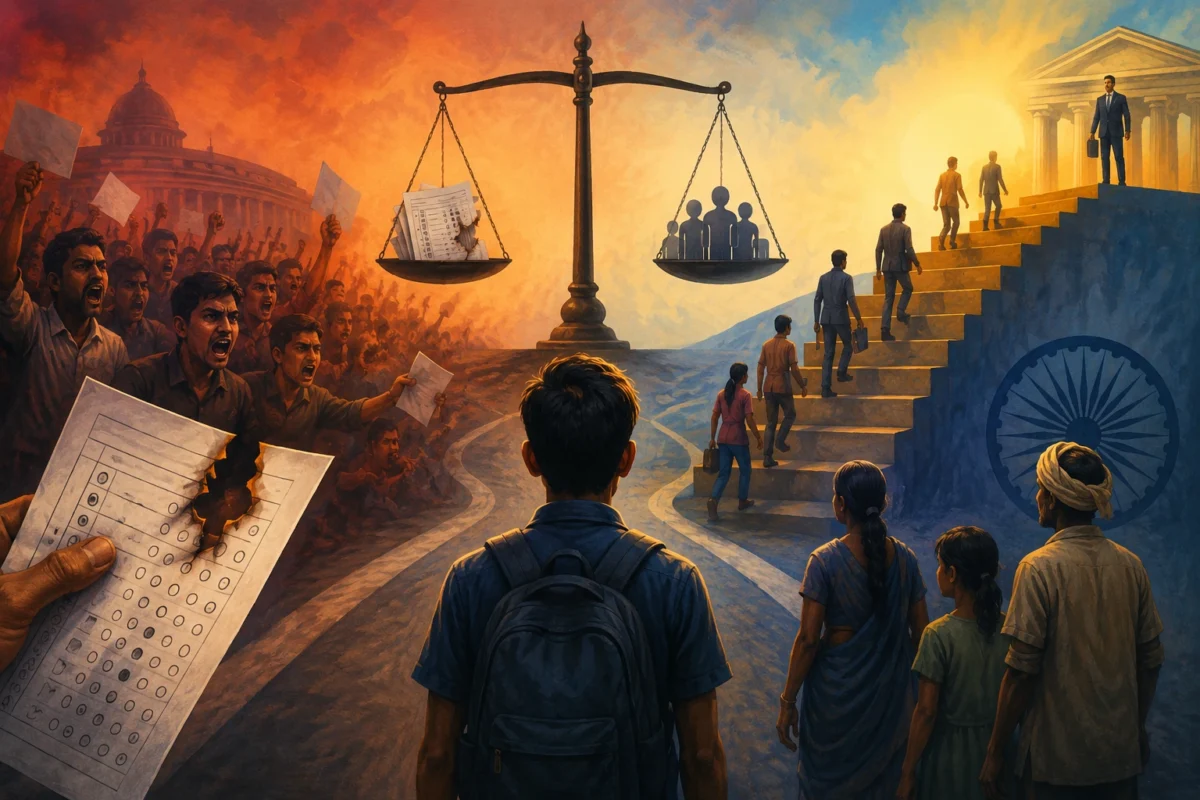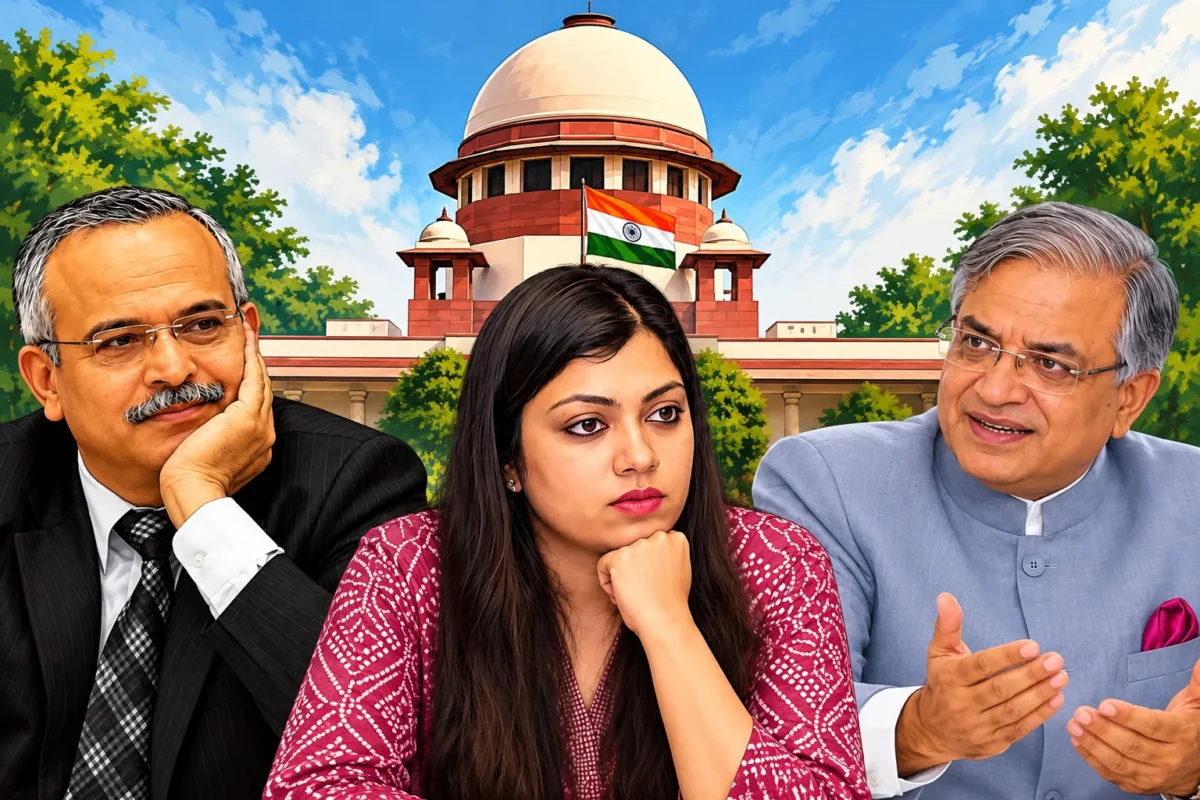
The last several months have witnessed something unprecedented in India’s political landscape. A massive student unrest has built up, with splinter protests of farmers and tribals scattered across the entire geography of the country. What began as localized grievances has metastasized into a nationwide cry of anguish from the very demographic that was supposed to inherit the nation’s future.
At the heart of this uprising are the millions of young Indians students, exam aspirants, job seekers who have discovered something their predecessors never quite managed to articulate: a diagnosis of their predicament that cuts through the fog of partisan politics and reaches the structural rot at the core of the system.
Consider Rahul Gandhi’s Prayagraj rally yesterday. Lakhs of students and exam aspirants crammed into a confined ground, braving government restrictions and, perhaps more significantly, going against their familial ideological affiliations. These were not people searching for a platform or articulation of their grievances they had already found both, and they had accomplished much of it themselves on Instagram. The politicians simply followed the trail they had blazed.
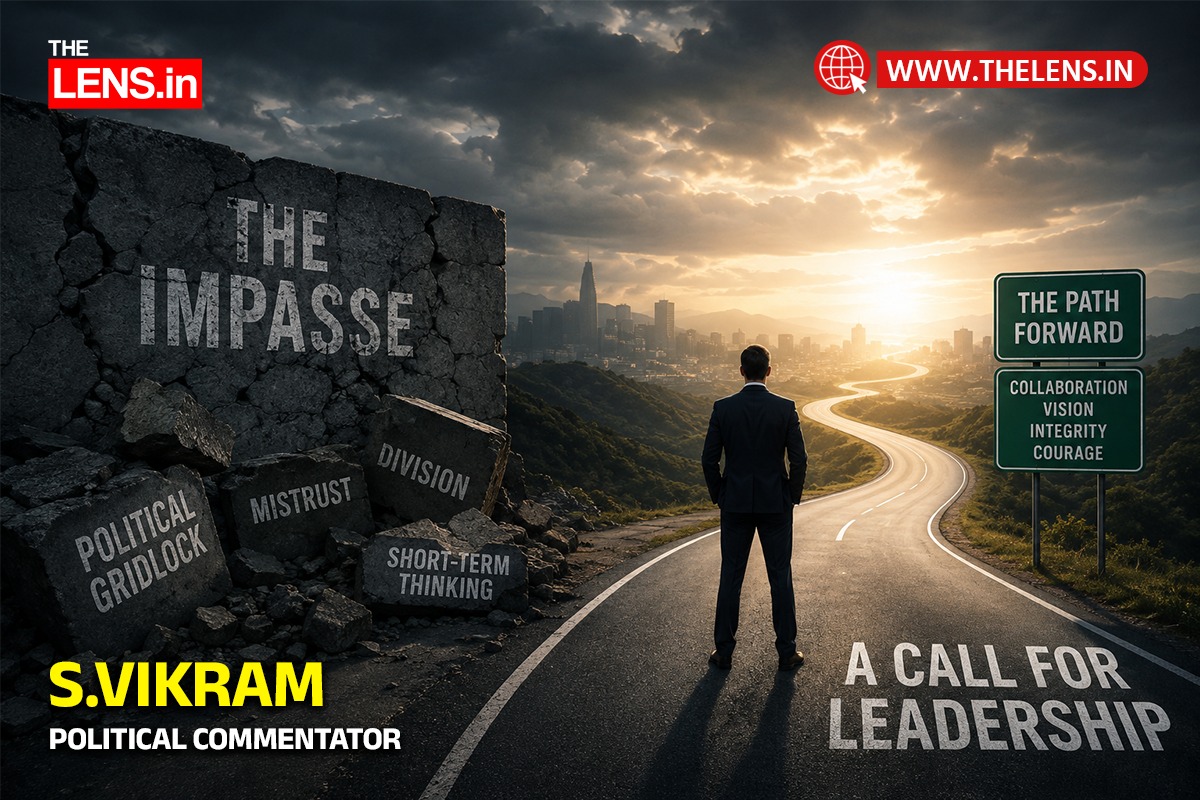
What they were looking for, what they have been looking for across four major rallies on this issue, is something far more consequential: a path to break the impasse.
Understanding the Systemic Capture
Rahul Gandhi has demonstrated a good understanding of the process. The RSS capture of the system especially education has been methodical and devastating. The examination system has been subverted purposefully to induct RSS pracharaks and sympathizers, with a generous helping of the moneybags willing to buy some seats. This is not conspiracy theory; it is the observable outcome of a deliberate institutional capture that has transformed the education sector from a meritocratic gateway to a patronage mill.
The extreme cronyism that has stifled the business world operates on the same principle. Institutional capture has made political action impossible from within the system, while the media dutifully diverts attention through manufactured spectacle. The Prime Minister himself has celebrated people eking out a living through social media reels, while simultaneously inflicting screen addiction on the youth through cheap data. The message is clear: don’t aspire for dignified employment, don’t demand productive work just perform for the algorithm.
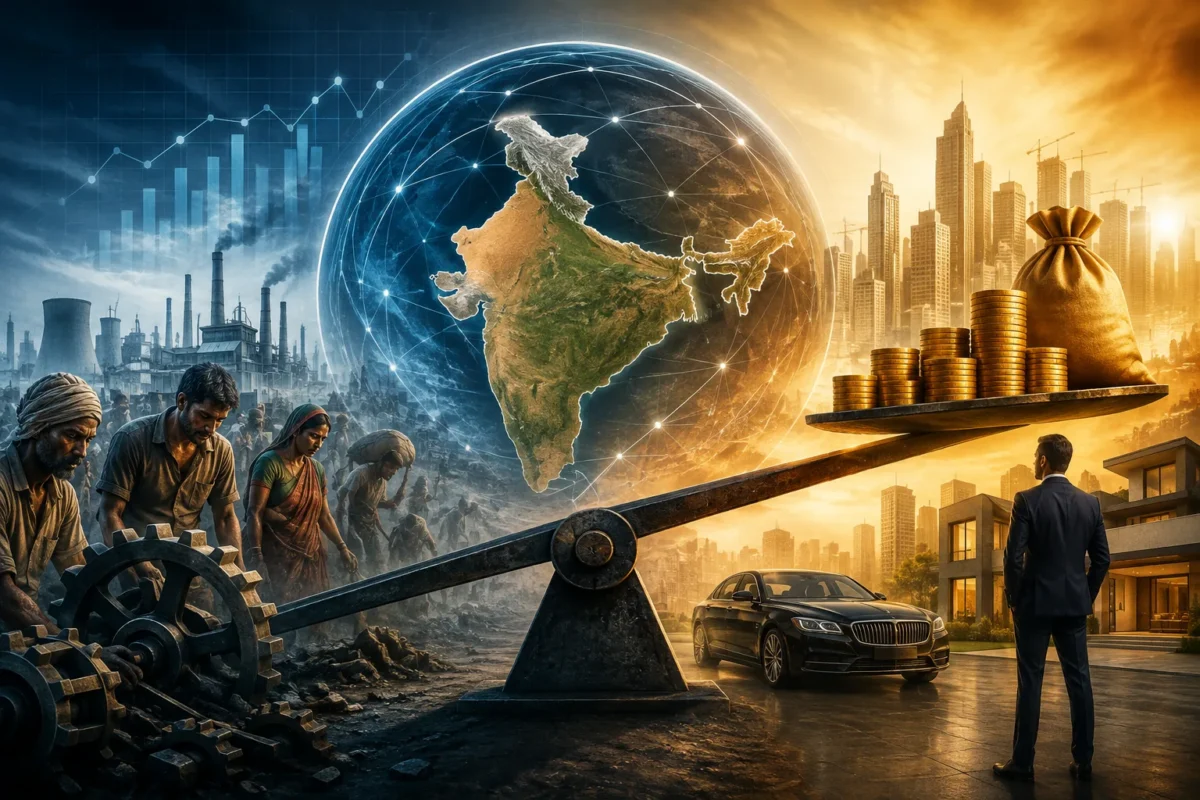
Together, these forces have created a rent-seeking environment of staggering proportions. Extreme inefficiency and low productivity have become features, not bugs, of a system where there is simply not enough capacity to accommodate the youth. The economy cannot absorb them because it was never designed to it was designed to extract from them.
What the Youth Know
The students and aspirants know this intimately. They have suffered it. They have argued it out with their families, many of whom remain loyal to the BJP for reasons of identity, habit, or fear. They have debated it on social media, in hostel rooms, in coaching centers, in the long queues for exam forms that never translate into jobs.
After Jantar Mantar, they know that they can act. They have tasted their own power. The collective weight of a generation has been felt, even if only fleetingly. They are powerful, and they know it.
But there are crucial political questions they have no answers to. This is where they are looking up to Rahul Gandhi for guidance.
The Unanswered Questions
The students need answers to questions that are not rhetorical but existential:
First, they don’t know if they have to work to defeat the Modi regime electorally. The 2029 general elections seem impossibly distant to those whose futures are being crushed in the present. Can they wait that long? Should they wait that long?
Second, they don’t know their primary ground of action. If electoral defeat is the goal, their battlefield is in their own families among the BJP’s voters who share their blood, their homes, their dinner tables. How does one persuade a parent, a grandparent, an uncle whose entire worldview has been shaped by decades of ideological conditioning?
Third, they don’t know how to relate to other protests. Should they join the farmers? The tribals? Should they lead them or follow them? The farmers have been fighting for years, their struggles documented but unresolved. The tribals face dispossession and erasure. What is the relationship between these movements and the student movement?
Fourth, they don’t know if they should educate the masses or follow the wisdom of the community. The arrogance of youth must be tempered by the humility of learning, but how does one distinguish between genuine wisdom and the tyranny of received opinion?
Fifth, and most fundamentally, they don’t know if they have to take direct action beyond the electoral frame, which has been effectively captured. If the system is rigged, if the institutions are compromised, if the media is bought, if the judiciary is cowed what does legitimate resistance look like?
What Leadership Means
This is what they understand by leadership. Not speeches in Parliament. Not press conferences. Not policy papers. They have seen all of those, and they have seen them fail. What they need are answers to these strategic questions. They need someone to tell them not what they already know that the system is broken but what to do about it, here and now.
Rahul Gandhi need not give them a plan of what he would do if in government. That is too distant a picture for them to visualize. Their lives cannot wait for the next election cycle. They need their energy to be channelized now and here.
The question before him, and before the country, is whether he can muster the courage to call upon the collective courage of this largest cohort in the nation’s history.
The Action Plan
The students have already demonstrated their capacity for mobilization. What they need is a program that translates their anger into strategy, their energy into efficacy.
- The Examination Boycott
The students must be called upon to boycott all examinations until the flawed system is revamped. This means:
The NTA must be revoked
The PSCs must be reconstituted
The calendar of all pendencies amounting to more than a million vacancies must be published, with a commitment to fill them this year
This is not a demand for indefinite postponement. It is a demand for transparency and accountability. The examinations will resume when the system is cleansed of its corruption. Until then, no student should participate in a rigged game.
- The Jail Bharo Andolan
The history of India’s freedom struggle teaches us that civil disobedience works. A call for Jail Bharo a filling of the jails would exploit the vulnerabilities of the state in ways that conventional protest cannot.
Indian jails are already filled beyond capacity. Even a few hundred thousand volunteers could overwhelm the government, its policing apparatus, and its law and order machinery. Five hundred per district would be impossible to handle. The system would wilt under the weight of its own imprisoned citizens.
More importantly, such an action would permanently abolish the fear of the system. No tyranny can survive the negation of its fear. When the youth stop fearing the state, the state stops having power over them.
- The Exposure of the RSS Apparatus
A list must be published of all RSS-appointed professors and teachers. The female students who have been at the forefront of this movement should be called upon to permanently gherao them, demanding their dismissal.
This is not about violence. It is about visibility. It is about exposing the hidden architecture of power that has been operating in plain sight, masquerading as merit. The gherao is a democratic form of protest it makes the oppressor uncomfortable without making them martyrs.
- The Truth Commissions
Student committees must be appointed to investigate and publish factual reports and white papers on all the existing protests of farmers and tribals, especially those involving crony capitalists.
This serves multiple purposes. It educates the students about the broader struggle. It provides solidarity with other movements. It creates a documentary record that cannot be erased. And it builds the intellectual infrastructure for a post-BJP India that understands how it arrived at its present condition.
The Courage Required
None of this is easy. The state will retaliate. Families will be divided. The media will demonize. The powerful will conspire.
But the students have already shown that they are willing to face these consequences. They have already demonstrated that they are no longer afraid. What they need is someone to tell them that their courage is justified, that their action is strategic, that their sacrifices will not be in vain.
Rahul Gandhi has a choice. He can continue to be the thoughtful opposition leader, speaking truth to power in the comfortable chambers of Parliament. Or he can become something more a leader who does not merely diagnose the disease but prescribes the cure, who does not merely identify the enemy but marshals the forces to defeat it.
The students are waiting. The farmers are waiting. The tribals are waiting. The entire country is waiting.
The question is not whether Rahul Gandhi has the understanding. He has demonstrated that amply. The question is whether he has the courage to speak these truths, to call for these actions, to risk the consequences of genuine leadership.
The youth have already taken their first steps. They have broken the fear. They have found their voice. They have shown their power.
Now they need someone to show them the path. The impasse can be broken. The system can be changed. The future can be reclaimed. But it requires leadership. Is Rahul Gandhi ready to provide it?