The Ontology of the Gaali
In June 2024, a banner appeared at Jantar Mantar that broke every rule of Indian political discourse. It read simply: “F*** Fascists.” The police were baffled. The government was enraged. The commentariat was scandalized. But what they all missed was that this was not an act of vulgarity—it was an act of ontological defiance, the culmination of a linguistic rebellion that has been building for decades.
The gaali—the Hindi swear word, the expletive, the curse—has long been dismissed as the language of the illiterate, the crass, the uncivilized. But this dismissal reveals more about the dismissers than the dismissed. For the gaali is not a degradation of language; it is a weapon of the powerless, a linguistic denial of power structures that has found its most potent expression in India’s recent protests.
To understand why, we must journey through philosophy, linguistics, and political theory—from Bertrand Russell’s analysis of manners to the streets of Delhi, where the underclass has finally found its voice.
II. Bertrand Russell and the Aristocracy of Manners
Bertrand Russell, in his 1938 masterpiece Power: A New Social Analysis, identified something crucial about the nature of civility:
“Hereditary power has given rise to our notion of a ‘gentleman.’ This is a somewhat degenerate form of a conception which has a long history, from magic properties of chiefs, through the divinity of kings, to knightly chivalry and the blue-blooded aristocrat. The qualities which are admired, where power is hereditary, are such as result from leisure and unquestioned superiority.”
Russell’s insight is devastating: manners are not universal virtues; they are the cultural superstructure of hereditary power. The “gentleman” is not a moral ideal but a class marker—a performance of having never needed to work, struggle, or compete. The elaborate codes of etiquette, the refined speech, the careful address—all of it presupposes a society where power passes from father to son, where some are born to rule and others to serve.
“Where power is aristocratic rather than monarchical, the best manners include courteous behaviour towards equals as an addition to bland self-assertion in dealing with inferiors.”
This is the social logic of the Indian honorific system. The “Aap” for superiors, the “Tum” for equals, the “Tu” for inferiors—it is not mere politeness; it is a linguistic performance of hierarchy. It tells you who is above and who is below, who deserves deference and who must perform it. It is the daily, unconscious ritual that maintains the power structure without the need for police or armies.
Russell concludes:
“What survives in the way of admiration of the ‘gentleman’ depends upon inherited wealth, and must rapidly disappear if economic as well as political power ceases to pass from father to son.”
The “gentleman” is not eternal; he is historically contingent. Where hereditary power dissolves, manners as a basis for judgment dissolve with them. This is the materialist foundation of our linguistic world.
III. The Indian Grammar of Hierarchy
Russell’s framework illuminates something essential about Indian society. The caste system, the feudal zamindari, the colonial bureaucracy—all were systems of hereditary power that produced a complex linguistic apparatus for maintaining hierarchy.
The pronouns are not innocent:
Pronoun Social Meaning
Aap Formal, respectful. For elders, bosses, strangers, dignitaries. It acknowledges superiority.
Tum Informal, familiar. For equals, close friends, juniors. It suggests horizontality.
Tu Intimate or aggressive. For God, children, lovers—or to insult by refusing respect.
Every Indian child learns this code before they understand why it exists. They are disciplined for using the “wrong” pronoun; they internalize the shame of incorrect address; they learn to perform deference to those above them in the caste/class/education hierarchy. The system is reproduced daily, unconsciously, through the simple act of speaking.
The gaali is the refusal of this entire linguistic order. It is not just a swear word; it is a denial of the hierarchy that the honorific system maintains. When a Dalit worker mutters behenchod about his upper-caste boss, he is not just expressing anger; he is symbolically dismantling the legitimacy of the hierarchy. He is saying: “Your power is a fiction. I will not perform respect for you. I will speak to you in the language of the gutter—because that is where you have placed me.”
IV. The Anti-PC Archive: Modi’s Linguistic Rebellion
Before we examine the CJP protests, we must understand the archive of anti-PC rhetoric that Modi built over his tenure—a archive that reveals the full hypocrisy of his current position.
“Didi O Didi”
This was a deliberate, public refusal of deference. In the Rajya Sabha, where address is governed by strict protocols, Modi used the familiar, almost teasing “Didi” for the then-Union Minister Renuka Chowdhary. It wasn’t just informal; it was a calculated performance of equality—or, more precisely, a performance of superiority masked as informality. He was telling her, and the entire house, that her position was not worthy of his respect.
The “50 Crore Ki Girlfriend” Jibe
This was a masterclass in anti-PC as sexual innuendo. The accusation that someone is a “50 crore girlfriend” is a direct, public assault on character and reputation. It weaponizes the personal and the familial. It is the kind of language that would have been unthinkable in the “civilized” discourse of the Congress era. Modi made it thinkable. This is the democratization of insults—what the elite would have called “vulgar” becomes, in his hands, a political tool.
“Kapdon Se Pehchane” (“Identify by Clothes”)
This is a direct invocation of the tu vs. aap logic of Russell’s analysis—moved to identity politics. It says, simply: “You can tell the outsider, the enemy, by how they dress.” It is a statement that refuses the inclusion or sensitivity of political correctness. In a nation as diverse as India, to suggest that someone’s identity is determined by their clothing is the exact opposite of the PC ideal of a shared, universal civic identity.
“Ghuspaithiya” (Intruder)
This is the linguistic act of ontological denial. You deny someone’s right to exist in a space. You call them an “intruder” in their own home. It is the ultimate rejection of their claim to equal citizenship. This is the gaali of the state, wielded from the top down. It denies the Muslim community’s centuries-old connection to the subcontinent. It is the “top-down gaali” we discussed earlier—the reinforcement of absolute power.
The “Demonic” Jibe
This is the language of absolute dehumanization. You strip the “dignity of the office” from the office of the Prime Minister himself by using terms that are not just disrespectful, but existentially annihilating. It is the gaali as a weapon of ontological finish. You are not just arguing with someone; you are declaring them to be something less than human.
V. The “Tu-Tadak” Performance: Transcendence or Hypocrisy?
Modi’s claim that he speaks in “tu-tadak” with former US President Barack Obama is the summit of this anti-PC performance.
Whether true or not—and it almost certainly was not—the claim was a performative act of ontological defiance. Modi, the chai-wala’s son from Gujarat, the man with no political lineage, no elite education, no hereditary privilege, was telling his domestic audience:
“Look at what I have become. I now speak to the most powerful man on earth as a friend. The barriers of class, education, erudition, legacy, and power—the very barriers that have kept people like you beneath people like him—have been shattered by my rise. And if I can do it, so can you.”
Russell would recognize this immediately. Modi was performing the denial of hereditary power. He was claiming to have transcended the linguistic rituals that maintain hierarchy. He was saying that he no longer needs to use “Aap” for anyone—not even the President of the United States.
But Russell would also note the irony: the very performance reveals the persistence of the hierarchy. If Modi truly spoke to Obama as an equal, he would not need to announce it. The announcement is a signal to his audience—an audience that understands the weight of “Aap” vs. “Tu,” that has been disciplined by these linguistic codes their entire lives. Modi was not talking to Obama; he was talking to the millions of Indians who have been told they are small, and who desperately want to believe they can become big.
The “Tu-Tadak” claim was, in essence, a gaali directed at the Indian elite—a public, televised denial of their cultural authority. It said: “Your English, your Ivy League degrees, your dynastic legacy, your ‘Aap’—none of it matters. I have surpassed you.”
VI. Political Correctness: From Inclusion to Dysfunction
To understand the current moment, we must understand what happened to political correctness—how it transformed from a tool of inclusion into a weapon of elite regulation.
Born in the US in the 1970s, political correctness was originally a set of linguistic practices aimed at “promoting respect, inclusiveness and equity for all sections of the population” . It was about reframing reality—not mere relabeling, but “looking at [a given reality] from a different angle” to ensure marginalized groups were not erased or demeaned through language . In its original form, it was an epistemic intervention—a recognition that language shapes reality, and that inclusive language could shape a more inclusive reality.
But something transformed along the way. Under the influence of post-truth and populism, political correctness “underwent a serious shift in meaning and was reduced to a pedantic tool through which elites intervene in how ordinary people speak in daily life” . It ceased to be about protecting the vulnerable and became a performative ritual of elite virtue-signaling. It became:
A way to regulate speech rather than include people
A tool for thematic censorship—”restricting or even prohibiting discussion of certain topics and the use of certain words”
A weapon of ad hominem purity tests—where “it’s not what someone writes or says that is criticized, but the persons themselves”
The academic analysis identifies two types of political correctness:
Type Target Mechanism Effect
Thematic PC Words and topics Restricts or prohibits discussion of certain issues Creates “molds of political appropriateness”
Ad Hominem PC Individuals Judges people by their history or positions Subjects historical figures to “purity tests” disconnected from context
Both are dangerous for democracy. Thematic PC “hinders free discussion of certain issues” and undermines the informed citizenry that democracy requires . Ad Hominem PC eliminates dialogue entirely—positions are rejected “by definition, simply because they come from” the wrong person .
This is the dysfunctionality at the heart of contemporary political discourse. Political correctness stopped being about inclusion and started being about exclusion. It stopped being about protecting and started being about policing.
VII. Post-Truth: The Triumph of the Visceral
The dysfunctionality of political correctness created the conditions for post-truth as a political strategy. The mechanism is clear:
Political correctness became exclusionary. It told ordinary people: “You are speaking wrong. You are thinking wrong. Your language is unacceptable.”
This created resentment. The “ordinary people” who were being corrected felt that elites were dictating how they could speak, think, and live.
Populist leaders weaponized this resentment. Donald Trump’s declaration—”We don’t have time to be politically correct anymore” —was a direct appeal to this frustration. Modi’s entire political project was built on the same foundation.
The rejection of PC became a rejection of all elite knowledge. If the elites are wrong about language, the argument went, maybe they are wrong about everything—science, history, facts. The post-truth condition was born.
As one analysis noted, “post-truth is the triumph of the visceral over the rational” . And political correctness, in its dysfunctional form, helped create this triumph. By regulating speech without addressing the underlying grievances, it produced a resentment that could only be expressed through transgression—and a populism that could only succeed by rejecting elite knowledge entirely.
The oppositional binary was laid out explicitly in public discourse:
Political Correctness Political Incorrectness
Normative Transgressive
Soft Brutal
Censorship Freedom of speech
Lie Truth
Elite ideology Freedom of thought
This framing is powerful because it inverts the moral hierarchy. The person who rejects political correctness is not “uncivilized”—they are a truth-teller, a freedom fighter against elite oppression. The person who embraces PC is not “inclusive”—they are a censor, a liar, an agent of elite control.
This inversion is the epistemic foundation of post-truth. Once political correctness is framed as “lie” and political incorrectness as “truth,” objective facts become irrelevant. What matters is who is speaking and which side they are on.
VIII. The CJP Protests: The Gaali as Political Grammar
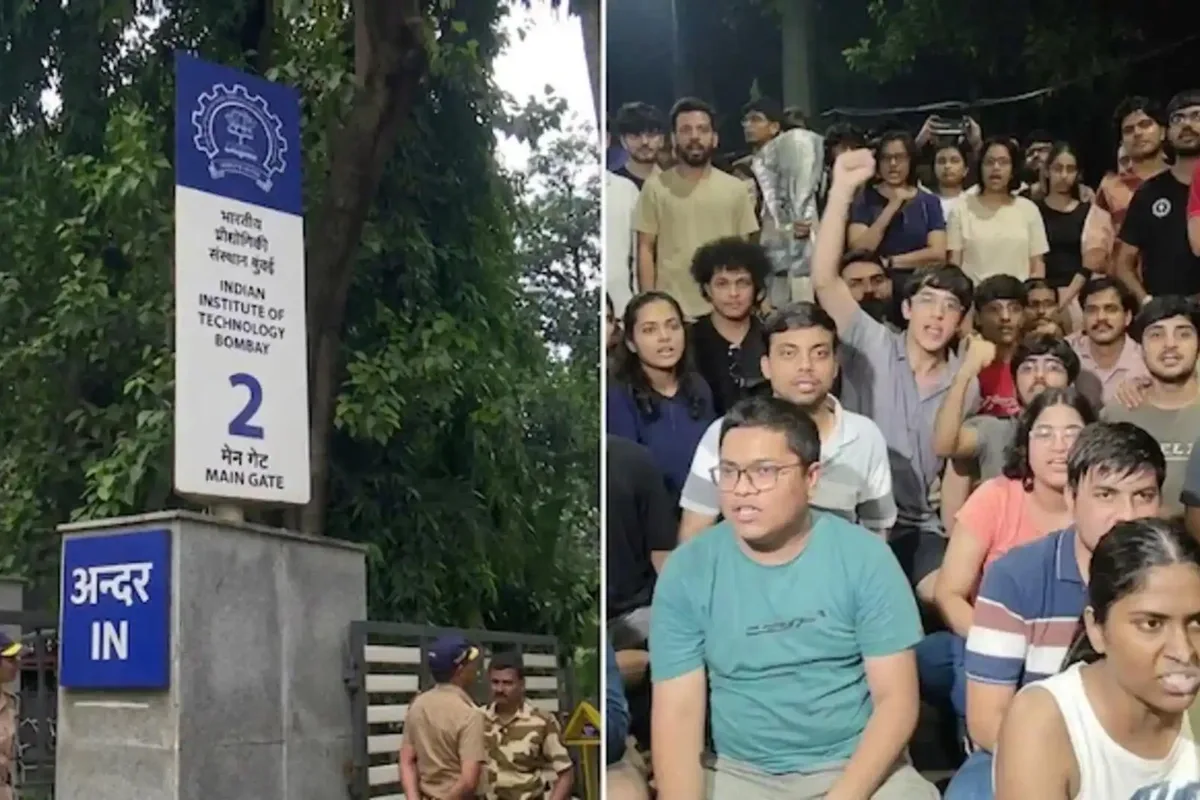
This brings us to the CJP (Cockroach Janta Party) protests at Jantar Mantar—the moment when the linguistic rebellion reached its culmination.
These protests were fundamentally different from the farmer protests or the anti-CAA protests. They were not organized around a single identity or community. They were the ventilation of the underclass—the working-class youth who had been failed by the system.
One analysis noted:
“The protesters of Jantar Mantar were not just demanding justice; they were refusing to perform deference. They were speaking in the language of the streets, the language of the excluded, the language of those who have been told their entire lives that they are filth—and who have decided to own that filth as a badge of honor.”
The use of expletives was central to this refusal. The gaalis hurled at the police and the government were not just expressions of anger; they were tools for building solidarity across class, caste, and institutional lines. The diverse crowd of students, professionals, and families created a new, shared linguistic space through the shared violation of social norms.
The Shared Linguistic Space
As one observer noted:
“The expletives made sharing the space possible with the DU/JNU crowd. It established a shared linguistic space. The gaalis that the women protesters hurled was rebellion beyond the universe of the right-wing Hindutva’s sociological imagination.”
This shared space was not built on identity; it was built on shared defiance. The protesters were saying: “We may be from different backgrounds, but we are united in our refusal to play your linguistic games. We speak the same language—the language of the gutter, the language of the excluded, the language of those who have been told they have nothing truthful to say.”
Refuting Hereditary Power
The protesters were, in the deepest sense, refuting hereditary power. They were saying: “We do not recognize your right to demand ‘Aap.’ We do not perform the deference that your hierarchy requires. We speak to you as equals—or as those who refuse to perform inferiority.”
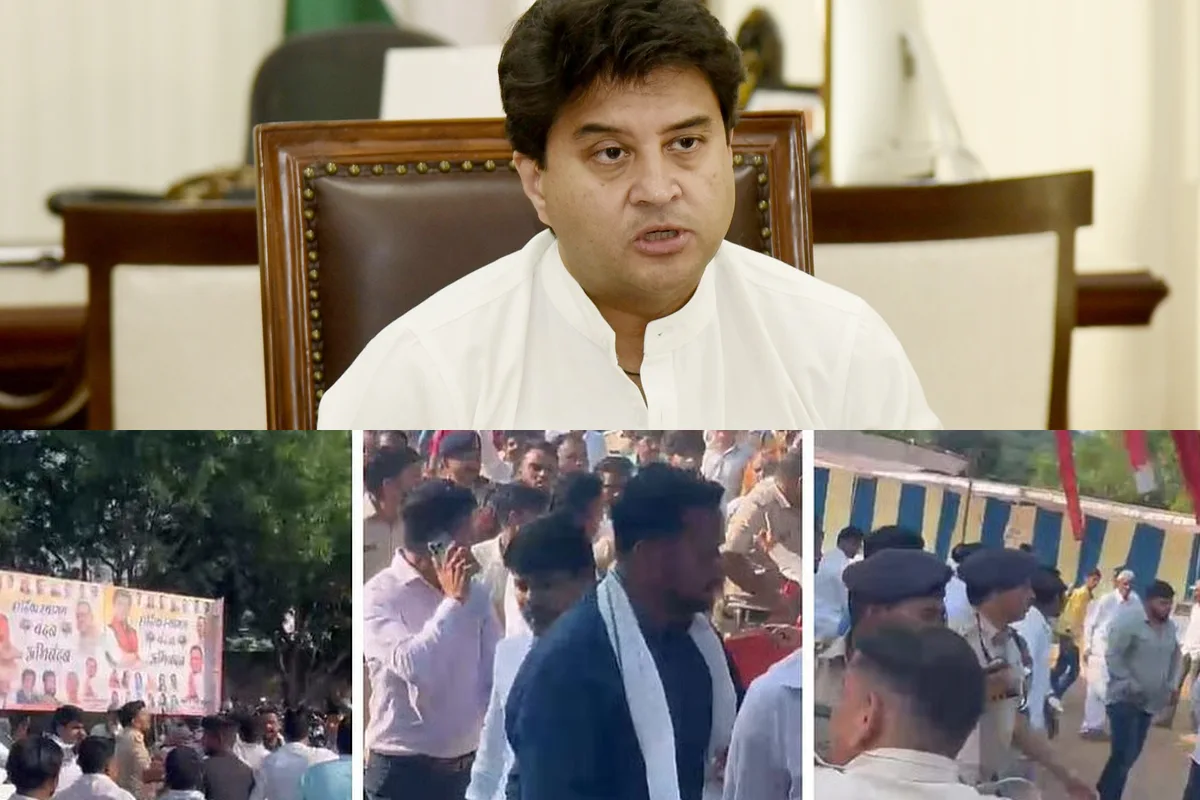
The state’s response was telling. It tried to frame the movement as an “anti-national” conspiracy. It restricted social media accounts. It deployed police force. It did everything except engage with the protesters’ grievances. The government had no framework for engaging a non-identified group because its entire political structure is based on managing identity-based politics. A protest that cuts across caste, class, and religion—a protest of the frustrated and the disenfranchised—was outside its operational logic.
IX. Women’s Gaalis: The Double Rebellion
The women protesters at Jantar Mantar were particularly significant. As one account noted:
“A saree-clad woman named Mana was seen screaming horrific expletives at the security forces and inciting the mob.”
The right-wing outrage was immediate. How dare a woman, a mother, a devotee of Maa Kali, use such language?
But this outrage revealed precisely why the women’s gaalis were so powerful. They violated both the caste/class hierarchy and the gender hierarchy simultaneously. The Hindutva imagination has a specific construction of femininity: the devi, the mother, the pure, the protected. A woman hurling expletives at the police—at the state, at the Prime Minister—is a figure that this imagination cannot comprehend.
This is rebellion beyond the universe of Hindutva’s sociological imagination. It is the denial of the paternalistic protection that the right-wing offers women in exchange for their silence. It says: “We are not your mothers, your daughters, your sisters to be protected. We are citizens with grievances, and we will speak in the language of those grievances—however crude, however shocking.”
X. The Ontological Contradiction: Modi’s Denial
Now we arrive at the ontological contradiction at the heart of this analysis: Modi used anti-political correctness and post-truth discourse to come to power, and he is now denying it to the young protesters.
The Cycle of Linguistic Rebellion
Modi, as opposition leader, weaponized anti-PC and post-truth discourse to delegitimize the Congress elite, positioning himself as the “truth-teller” who spoke the language of the common man against the “English-speaking, Delhi-centric, PC-obsessed” establishment.
Modi, as Prime Minister, now embodies the establishment. The same anti-PC rhetoric that brought him to power is now denied to the young protesters who are using it against him.
The CJP protesters, using gaalis and refusing deference, are doing exactly what Modi did—rejecting elite linguistic norms. But now that Modi is the elite, he cannot tolerate it.
The Evidence of Denial
The government’s response to the CJP protests reveals this hypocrisy:
Framing as anti-national: The government tried to label the movement as a “Pakistani conspiracy”—the same tactic used against anti-CAA protesters.
Social media crackdown: Delhi Police issued notices to social media platforms to remove “abusive” or “illegal” posts .
Police force: The state deployed police to suppress the protests, rather than engaging with the grievances.
Modi as Opposition Modi as Prime Minister
Anti-PC, anti-establishment Now the establishment
Used gaalis against Congress Cannot tolerate gaalis against him
Positioned himself as “truth-teller” Labels protesters as “anti-national”
Rejected elite linguistic norms Demands deference and “Aap”
The “Tu-Tadak” Hypocrisy
Modi’s “Tu-Tadak” claim was a performance of transcendence. He was saying: “I have risen above the hierarchy. I no longer need to perform deference.” But now that he is at the top, he expects deference from others. The “Tu” that was a badge of his rebellion becomes a demand for “Aap” from those below him.
This is the logic of hierarchy reasserting itself. As Russell argued, hereditary power produces manners as a marker of superiority. Modi, despite his anti-PC rhetoric, has become the hereditary gentleman—even if his power is not technically hereditary, he demands the same linguistic deference that the old elite demanded.
XI. The Epistemic Crisis
This hypocrisy reveals the deep epistemic crisis at the heart of Indian politics.
The Denial of the “Unidentified” Protest
The government’s inability to engage with the CJP protests reveals the epistemic bankruptcy of the current political framework. The regime’s entire structure is based on managing identity-based grievances. It can handle:
A Muslim protest (label it “anti-national”)
A Dalit protest (offer token compensation)
A farmer protest (negotiate with leaders)
But it cannot handle a protest that refuses identity categories. The CJP protesters were not Muslims, Dalits, or farmers; they were just citizens. And the regime has no framework for engaging citizens as citizens.
This is the post-truth condition in action. The regime has rendered identity categories meaningless—they are used only as instruments of political management. When a group refuses these categories, the regime cannot function.
The Inversion of Truth
The post-truth condition is complete: the truth is not what is said, but who says it.
When Modi said “ghuspaithiya,” it was a “political necessity.”
When a young protester says “fuck fascists,” it is a crime.
When Modi used “Didi o Didi” in the Rajya Sabha, it was “bold truth-telling.”
When a protester uses a gaali against Modi, it is “anti-national vulgarity.”
The same linguistic rebellion is recast as treason the moment it points upward.
XII. The Ontological Reassurance of Rebellion
Despite the regime’s denial, the CJP protests performed an important ontological reassurance for the underclass.
The Subaltern Gaali
The gaali is the voice of the subaltern. It refuses the hierarchy that the honorific system maintains. It denies the PC framework that the new elite imposes. It asserts the truth that the powerless have been silenced from speaking.
The CJP protesters, by using gaalis, were saying: “We are not your ‘Aap’ subjects. We are not your PC categories. We are human beings with grievances, and we will speak in the only language that is left to us—the language of rebellion.”
Partners in Crime
As we have argued throughout this analysis, no bond is stronger than that of partners in crime. The gaali is the crime that everyone can commit. When two friends exchange a behenchod casually, they are not just communicating; they are co-conspiring. They are jointly violating a social norm. They are saying to each other: “Look, we just broke the rule. And the sky didn’t fall. The police didn’t come. God didn’t strike us down. The rule was a fiction. And we are still here. Our bond is real. Their power is not.”
The CJP protesters created a shared linguistic space across class, caste, and institutional lines through this shared violation. The expletives made sharing the space possible with the DU/JNU crowd. It established a shared linguistic space. The gaalis that the women protesters hurled was rebellion beyond the universe of the right-wing Hindutva’s sociological imagination.
XIII. Russell’s Prophecy
Russell concluded that the ideal of the “gentleman” depends on inherited wealth and will “rapidly disappear if economic as well as political power ceases to pass from father to son.”
India is not there yet. Caste, dynastic politics, and inherited wealth persist. The “Aap” vs. “Tu” distinction still carries ontological weight. But the CJP protests suggest that the linguistic rituals of hierarchy are losing their grip. The underclass has discovered the power of refusal.
As one journalist observed, the protesters had “seen through the Modi government’s devious game of using communalism to conceal its failure to improve schools and colleges, and provide jobs befitting their educational credentials.” Their gaalis were not just words; they were the grammar of a new political consciousness.
XIV. Conclusion: The Revolution That Cannot Be Undone
The Jantar Mantar protests may or may not lead to concrete change. The resignation of Education Minister Dharmendra Pradhan was a victory, but the larger battle over India’s political grammar is far from over.
But something irreversible has happened. A generation has discovered that it does not need to perform deference. It has discovered that the gaali is a weapon—and that it can be wielded without fear. It has discovered that the power structure, which depends on linguistic rituals to maintain itself, is vulnerable to linguistic rebellion.
Russell wrote that manners will disappear when hereditary power disappears. But he did not consider that hereditary power might be challenged through the denial of its linguistic rituals. The gaali is not just a symptom of rebellion; it is the rebellion itself—a refusal to speak the language of the master, a refusal to perform the rituals of deference, a refusal to accept that some are born to say “Aap” and others to hear it.
The underclass is learning to speak in a new tongue. And the regime, which has no framework for engaging an unidentified group, does not know how to respond. It can deploy the police; it can restrict social media; it can try to frame the movement as anti-national. But it cannot force the protesters to say “Aap.” It cannot compel the performance of deference. It cannot restore the linguistic order that has been shattered.
And that is the revolution that cannot be undone.
The final question, then, is this: Can India’s political system evolve to engage with citizens beyond identity categories and PC constraints? Or will the cycle of linguistic rebellion and suppression continue, with each generation discovering the power of the gaali and each regime trying to suppress it?
The answer lies in whether the regime can learn to hear the gaali—not as vulgarity, but as the only honest language left for those who have been excluded from the conversation entirely.