In the grammar of Indian politics, few phrases have become as dogmatic and self-defeating as ‘constructive opposition.’ It is invoked ritually by ruling parties, amplified by aligned media, and even occasionally adopted by opposition figures themselves as a badge of responsibility.
The promise is seductive: oppose policies that are flawed, but do so ‘constructively’ — support well-meaning initiatives, offer better alternatives, and remain within established parliamentary norms. This, we are told, shows respect for the constitutional democratic order.
Yet in the India of 2026, this juxtaposition of ‘constructive’ with ‘democracy’ has become dysfunctional and absurd. When key constitutional offices—meant to embody neutrality and safeguard the republic—are perceived as captured or misappropriated by the executive majority, the demand for perpetual constructiveness enforces deference to a broken order.
It turns opposition into complicity, accountability into obstruction, and constitutional defense into disruption. The result is a political grammar that privileges majoritarian mandate over constitutional fidelity, reducing opposition to a lapdog role or forcing it into symbolic, often doomed, battles.
The Dogma and Its OriginsThe phrase ‘constructive opposition’ emerged in post-independence parliamentary discourse, drawing loosely from Mahatma Gandhi’s Constructive Programme—the positive, self-reliant building work (khadi promotion, untouchability removal, village sanitation) that served as interludes in his struggle-truce-struggle (S-T-S) strategy against colonial rule.
In the nascent republic, it was reframed as responsible parliamentary behavior: critique without undermining governance, alternatives without total confrontation.But this diluted the radical edge.
Gandhi’s constructive work was subversive—preparatory for renewed escalation against unjust structures. Post-1950, it became a leash: opposition should never lead total mobilization against a constitutional government. The idiom stuck, especially in eras of single-party dominance or fragile coalitions, where stability was prized over contestation.
Today, it is weaponized. Ruling voices praise ‘constructive criticism’ while branding robust dissent as ‘disruptive’ or ‘destructive.’ Media echoes the question: Is the opposition ‘constructive enough’? This policing delegitimizes any challenge to institutional capture, equating constitutional disruption with anti-democratic chaos.
The Current Dissociation: Constitutional from DemocracyIndia is not merely a democracy; it is a constitutional democracy. Pure democracy vests authority in majority will; constitutional democracy subordinates that will to supreme law—fundamental rights, judicial review, minority protections, impartial institutions.
When the constitutional framework is divorced from democratic practice—when majoritarian ‘mandate’ overrides neutrality—the opposition is trapped. Recent events illustrate this absolute dissociation: In March 2026, the Lok Sabha rejected a no-confidence motion against Speaker Om Birla by voice vote after a nearly 13-hour debate marked by opposition protests.
The motion alleged bias in House management, including debate allocation and procedural favoritism. Defeated numerically, it exposed how the Speaker—meant to be impartial—is shielded by majority.
Earlier, opposition MPs submitted a no-confidence notice against Vice President/Rajya Sabha Chairman Jagdeep Dhankhar, citing partisan conduct in chairing sessions.
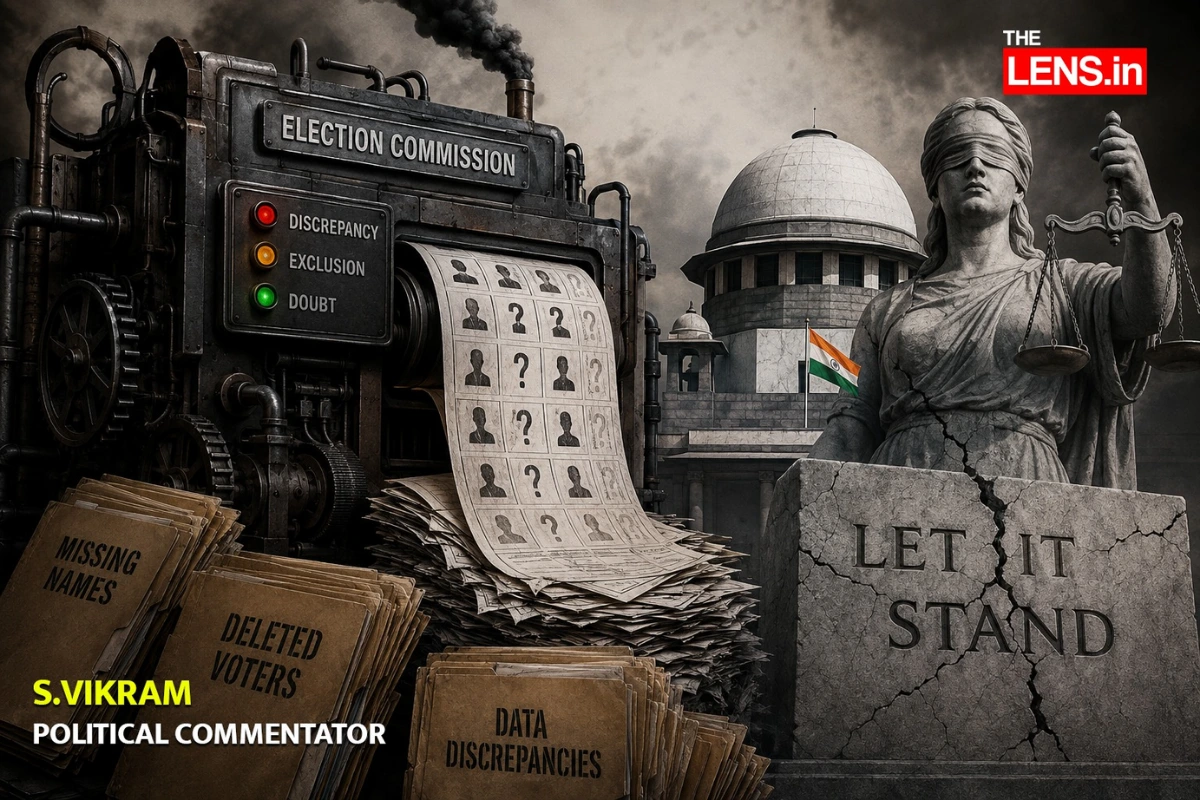
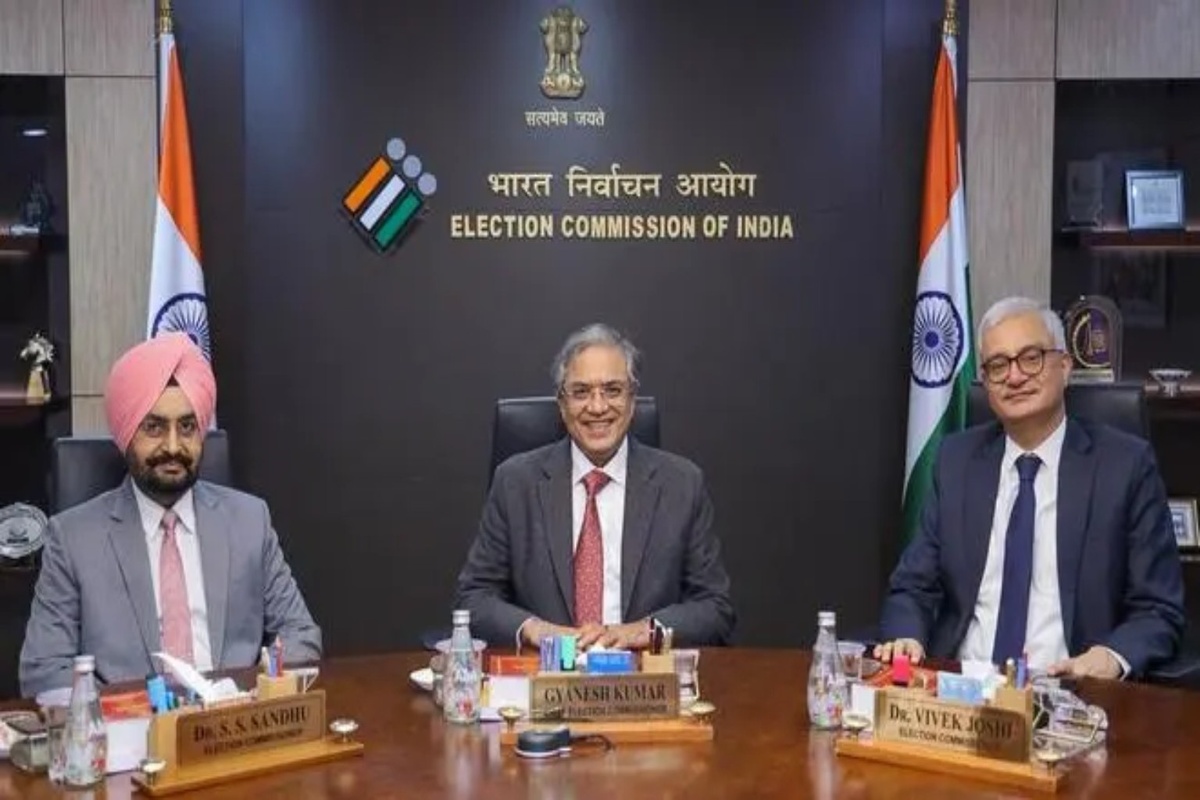
Most dramatically, on March 13, 2026, opposition parties (INDIA bloc) moved an impeachment notice against Chief Election Commissioner Gyanesh Kumar—the first such move in history—alleging partisan conduct, voter disenfranchisement via Special Intensive Revision exercises, and obstruction of fraud probes.
Signed by around 193 MPs across Houses, it invokes Article 324(5), requiring removal like a Supreme Court judge (proved misbehaviour/incapacity, 2/3 majority). Unlikely to pass, it highlights fears of electoral apparatus misappropriation.
These are not routine spats; they are constitutional weapons deployed when parliamentary norms fail. Yet defeats reinforce the narrative: opposition is ‘obstructive,’ not defenders of the system.
Historical Precedents: When Opposition Transcended ConstructivenessPost-independence history shows opposition legitimacy in radical predicates when orders break and apparatuses are captured.
Jayaprakash Narayan’s 1974 Bihar Movement escalated from student protests to ‘Total Revolution’ (Sampoorna Kranti)—a holistic call for social, economic, political, cultural, educational, and spiritual transformation.
JP threatened to gherao the Prime Minister’s residence and siege Parliament, mobilizing masses beyond legislative norms. This disrupted a corrupt order and targeted misappropriated governance, pressuring systemic change (1977 Janata victory) despite the Emergency backlash.
In 1989, amid the Bofors scandal, over 100 opposition MPs resigned en masse from Lok Sabha, withdrawing from a tainted legislative process to delegitimize executive shielding.
The 2011 Anna Hazare-led India Against Corruption movement denied the legislature’s monopoly on law-making, imposing civil society input via hunger strikes and mass protests—disruptive of corruption-riddled order, destructively challenging parliamentary exclusivity.
Regionally, Bangladesh’s opposition (BNP) has repeatedly boycotted elections and government since the 1990s, demanding neutral caretakers amid perceived rigging—total withdrawal to delegitimize captured electoral apparatuses.
These were not destructive of constitutional democracy but reconstructive: disrupting broken orders, targeting misappropriated tools, to reorder power.
Reclaiming Disruption and Destruction as Legitimate PredicatesThe order is broken—hierarchies entrenched, institutions aligned. The system’s apparatus has been misappropriated—neutral offices serving executive dominance. Therefore, both disruption (of unjust orders) and destruction (of captured apparatuses, via reconstitution) are legitimate opposition predicates.
Disruption interrupts business-as-usual to expose capture: motions, protests, mobilizations within constitutional bounds.
Destruction targets perverted tools—not the Constitution, but its misappropriation—through extra-parliamentary escalation, boycotts, or S-T-S cycles when norms fail.
This aligns with the Ambedkar-Gandhi synthesis: Ambedkar’s structural instruments demand confrontation with hierarchies; Gandhi’s discipline ensures non-violent, bounded escalation. Rahul Gandhi’s March 13, 2026, Lucknow speech—reclaiming Congress as a ‘poor party,’ invoking the Constitution as egalitarian culmination—hints at ideological disruption over accommodation.The case against constructive opposition is clear: in a dissociated polity, it enforces complicity.
True opposition must rephrase the grammar—discard the dogma, introduce precision (‘constitutional disruption,’ ‘reconstructive destruction’), and embrace predicates that defend constitutional democracy against its betrayal. Whether this becomes praxis or remains symbolic will determine if opposition revives as transformative force or fades into irrelevance.