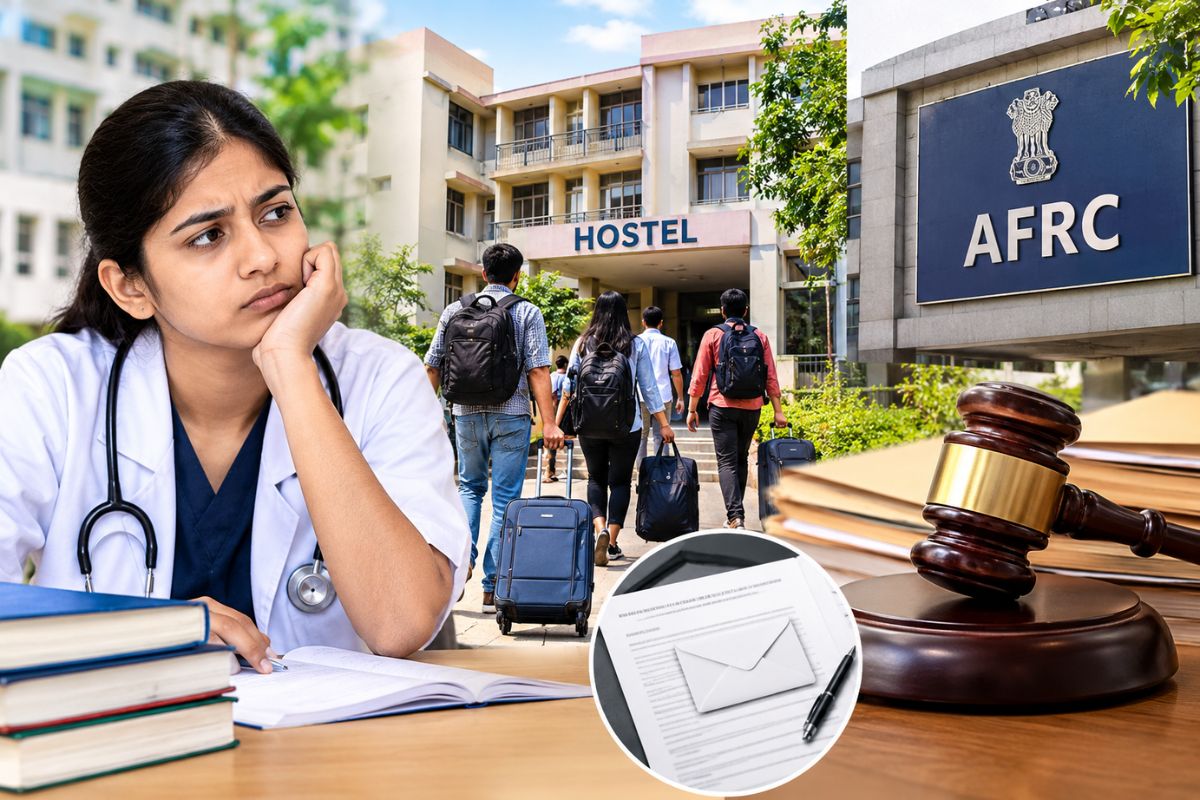
On April 2, 2026, a man named Motab Shaikh walked into the Supreme Court of India. He was not an ordinary petitioner. He was the official candidate of the Indian National Congress — the largest opposition party in the country — for the upcoming West Bengal assembly elections. He carried a passport. He was a previously mapped voter, meaning the Election Commission’s own system had already verified and recorded his existence. His name was on file. His identity was not in dispute.
He had been deleted from the electoral roll.
The reason? A spelling discrepancy. An error made not by Motab Shaikh, but by the official who had originally entered his name into the system.
Two days remained before the nomination deadline. Without enrollment as an elector, he could not file his papers. Without his papers, the constituency’s voters would be denied their chosen candidate. The Supreme Court of India heard his case, acknowledged that minor spelling errors should not result in deletion for a mapped voter with documentary proof, and then — directed him to approach an Appellate Tribunal.
In the history of Indian electoral jurisprudence, few moments have so precisely illustrated the distance between a right acknowledged and a right protected. Motab Shaikh’s case is not a footnote. It is a mirror. And what it reflects is a constitutional order that has learned to speak the language of rights while systematically declining to enforce them.
The Bureaucratic Guillotine
To understand what happened to Motab Shaikh, one must first understand the Special Intensive Revision of electoral rolls — the exercise the Election Commission of India has been conducting in West Bengal ahead of the 2026 assembly elections. The SIR is, in principle, a legitimate and overdue administrative exercise. Electoral rolls in India are genuinely cluttered with the names of the deceased, the permanently migrated, and duplicates. This impedes smooth polling operations and, more seriously, creates the conditions for impersonation fraud. Cleaning the rolls is not merely permissible — it is necessary.
But the SIR as implemented in West Bengal has revealed a structural pathology that goes far beyond administrative housekeeping. The exercise has resulted in deletions running into tens of lakhs. It has placed hundreds of thousands of entries into an “adjudication” category — a legal grey zone where trained officers determine, on the basis of documentation and verification, whether a voter is who she says she is and whether she is entitled to remain on the roll. And it has done all of this in the weeks immediately preceding an election, against a deadline that makes meaningful correction of errors virtually impossible.
This is where the SIR crosses a constitutional threshold that its defenders have consistently refused to acknowledge. Removing a deceased voter from a roll is an administrative act. Removing a duplicate entry is a data management function. But determining whether a living, documented, previously enrolled citizen is entitled to vote — adjudicating her citizenship, her residency, her identity — is a judicial function. It requires notice. It requires a meaningful opportunity to be heard. It requires a reasoned order. It requires an appeal mechanism that is not merely technically available but practically accessible given the timeline of elections.
The SIR provides none of this at the first instance level. The Electoral Registration Officer is not a court. The Booth Level Officer who conducts the house visit is a field functionary. The “adjudication” that placed Motab Shaikh’s name on a deletion list was made without the evidentiary standards his case constitutionally demanded. And when the highest court of the land was confronted with this failure in its most stark and undeniable form — a documented, passport-holding, officially nominated candidate deleted on the basis of a transcription error — it responded not with correction but with referral.
The Mathematics of Discrimination
Motab Shaikh’s case would be troubling in isolation. In context, it is damning.
Alt News, conducting a granular analysis of the SIR adjudication data for two West Bengal assembly constituencies — Bhabanipur and Ballygunge — found that Muslims constitute approximately one-third of the combined electorate. They constitute two-thirds of those placed under adjudication. In Bhabanipur, the constituency represented by Chief Minister Mamata Banerjee herself, Muslims make up roughly one in five voters — and more than one in two of those flagged for adjudication. A Muslim voter in these constituencies was statistically three times more likely to face adjudication than a Hindu voter.
The Election Commission and its defenders will say, with some technical accuracy, that this disproportion may reflect structural factors rather than deliberate targeting: Muslim names are more susceptible to transliteration variation between Bengali, Urdu, and Roman scripts; Muslim communities in West Bengal have higher rates of internal migration; documentation penetration in these communities is lower. These explanations have a surface plausibility. They have no constitutional validity.
A process whose facially neutral criteria produce a three-to-one demographic disparity in outcomes is not a neutral process. It is a process with discriminatory effect, regardless of discriminatory intent. The Supreme Court has, in other domains of constitutional law, recognised that disparate impact can constitute evidence of the violation of Articles 14 and 15 — the guarantees of equality and non-discrimination. It has applied this reasoning to service conditions, land acquisition, and reservation policy. It has conspicuously declined to apply it here, to the most fundamental right in a democracy.
The Alt News data is drawn from only two constituencies. There are 294 assembly constituencies in West Bengal. The SIR has affected voters across all of them. We do not yet have comparable granular analysis for Malda, Murshidabad, and the other districts where Muslim populations are concentrated and deletion reports have been highest. When that data emerges — and it will — the two-constituency pattern will almost certainly be confirmed as statewide.
This is not electoral administration. It is electoral engineering. And it is being conducted with the implicit sanction of a Supreme Court that has chosen process management over rights protection at every critical juncture.
The Right That Cannot Be Exercised
Let us be precise about what Motab Shaikh lost when the Supreme Court sent him to the Appellate Tribunal on April 2, with two days until the nomination deadline.
He lost, first, the practical certainty of his candidacy. The Appellate Tribunal was directed to dispose of his appeal “preferably by the forenoon of April 6.” Not mandatorily. Preferably. In a system that has demonstrated, at every turn, a capacity for procedural delay when urgency is most needed, “preferably” is not a guarantee. It is a hope.
He lost, second, two days of campaigning. In a constituency that he had not yet officially entered as a candidate, where voters did not yet know with certainty that he would be standing, where his party’s mobilisation machinery could not be deployed with full confidence — two days is not a minor inconvenience. In a first-past-the-post system where margins of victory are often measured in hundreds or low thousands of votes, two days of lost campaign time can be the difference between winning and losing.
He lost, third, something less quantifiable but more important: the dignity of uncontested citizenship. A man with a passport — the most internationally recognised proof of citizenship that the Indian state issues — was required to prove to an Appellate Tribunal that he existed, that he was who he said he was, and that an official’s spelling error was not grounds for his disqualification. The state made the error. The citizen bore the burden. That inversion is not a procedural technicality. It is a statement about the relationship between the citizen and the state in contemporary India.
And the voters of his constituency lost something too. They lost two days of access to their candidate. They lost the certainty that the person they intended to vote for would appear on their ballot. In a democracy, the right to vote encompasses the right to vote for a candidate who has had a fair opportunity to campaign. When the system disables that opportunity through administrative negligence and then directs the remedy to a process that cannot be completed before the damage is done, it is not merely the candidate’s political rights that are violated. It is the political rights of every voter in that constituency.
The Pattern Behind the Particular
The Motab Shaikh case does not stand alone. It stands at the apex of a pyramid of disenfranchisement whose base is composed of millions of ordinary voters — the migrant labourer in Malda whose name has been deleted because he was not home when the BLO visited; the Muslim woman in Murshidabad whose name is spelled differently in her Aadhaar card than in the original voter roll entry; the Dalit farmer in Birbhum who does not possess any of the eleven documents the EC mandated for re-verification; the young man who registered to vote before leaving for work in Surat and has no way of attending a tribunal hearing in Kolkata by a deadline he learned about last week.
For these voters, there is no Supreme Court petition. There is no senior advocate. There is no LiveLaw reporter covering the hearing. There is only the closed gate of a tribunal office, the expired deadline of a nomination form, and the cold arithmetic of an election conducted without them.
This is the context in which Justice Bagchi’s now-notorious observation must be understood. His remark — that if someone cannot vote in this election, their right is not extinguished forever — was offered as reassurance. It landed as an epitaph. It revealed, more nakedly than any formal judgment could, the conceptual framework within which the court is operating: one in which the franchise is understood as an abstract legal entitlement that survives individual elections, rather than a concrete political act that is exercised in specific elections or not at all.
Elections in India come once every five years. The government formed in those elections controls the state apparatus — the police, the bureaucracy, the appointment machinery of constitutional bodies — for the entirety of that term. A party that wins an election on the back of a manipulated voter roll has both the motive and the institutional capacity to further consolidate its advantage before the next one. The cycle, once initiated, is self-reinforcing. To tell the disenfranchised voter that she may vote next time is to ignore the structural reality that the next time may be shaped by the outcome of this time.
The Burden That Must Not Travel
There is a principle in constitutional law, articulated in various forms across the jurisprudence of courts from Strasbourg to Washington to New Delhi, that where the state has made an error that affects a fundamental right, the burden of correction cannot be placed on the citizen. The state erred; the state must correct. The citizen is not required to litigate her own citizenship in the final days before an election to remedy a mistake she did not make.
The Supreme Court of India has affirmed this principle repeatedly in the context of custodial rights, property rights, and service entitlements. It has declined to apply it to voting rights at the very moment when its application is most urgent.
What the Court should have done in Motab Shaikh’s case is not complicated. The facts were clear. The error was the system’s own. The documentation was unimpeachable. The deadline was immovable. The appropriate order was restoration — immediate, unconditional, with a direction to the ECI to audit and correct all comparable cases of mapped voters deleted on the basis of spelling discrepancies. Such an order would have taken the bench thirty minutes to draft. It would have cost the Court nothing in terms of institutional credibility. It would have preserved, in one concrete instance, the constitutional order that the SIR is systematically eroding.
Instead, the Court issued a facilitated adjournment and called it justice.
The Institutional Reckoning That Must Come
Let us name what is happening, with the precision it deserves.
The Election Commission of India is conducting an exercise that deletes millions of voters from rolls — disproportionately from Muslim and marginalised communities — using procedural criteria that are facially neutral but structurally biased, at a pace and scale that makes meaningful first-instance review impossible, in a timeframe that makes even appellate correction largely academic. It is simultaneously processing bulk additions of voters, in numbers that exceed all statutory limits, through a mechanism that opposition parties cannot scrutinise in time to object. The net effect of deletion and addition, taken together, is a voter roll that more closely resembles the ruling party’s preferred electorate than the actual population of the state.
The Supreme Court, which alone has the authority and the mandate to arrest this process, has responded by setting up tribunals, monitoring compliance, extending deadlines, and issuing directions that facilitate individual remedies while declining to interrogate the systemic failure. It has treated a constitutional crisis as an administrative challenge to be managed rather than a fundamental rights emergency to be resolved.
This is not neutrality. Neutrality in the face of structural injustice is complicity. When the court declines to use its Article 142 powers — its extraordinary jurisdiction to do “complete justice” — in a case where a documented, officially nominated candidate has been deleted from electoral rolls on the basis of his own government’s transcription error, two days before nomination closes, it is making a choice. The choice has a name.
The framers of the Indian Constitution gave the Supreme Court its counter-majoritarian role precisely because they understood that democratic majorities could not be trusted to protect the rights of those they had the power to exclude. They gave it the explicit mandate to stand between the citizen and executive overreach. They gave it the tools — Articles 32, 136, and 142 — to act with the urgency that fundamental rights demand.
The question before the Court is not, ultimately, whether Motab Shaikh’s name should be restored to the electoral rolls. That question answers itself. The question is whether the Supreme Court of India understands that its role in this moment of democratic stress is not to supervise a process that is consuming the franchise of millions, but to defend the constitutional order those millions were promised.
Motab Shaikh walked into the Supreme Court with a passport and a party’s nomination. He was sent to a tribunal with two days left. Somewhere in West Bengal, there are millions of voters without passports, without parties, without senior advocates, without LiveLaw covering their hearing.
They have nowhere left to go.
And if the Supreme Court does not act — not manage, not monitor, but act — neither does Indian democracy.