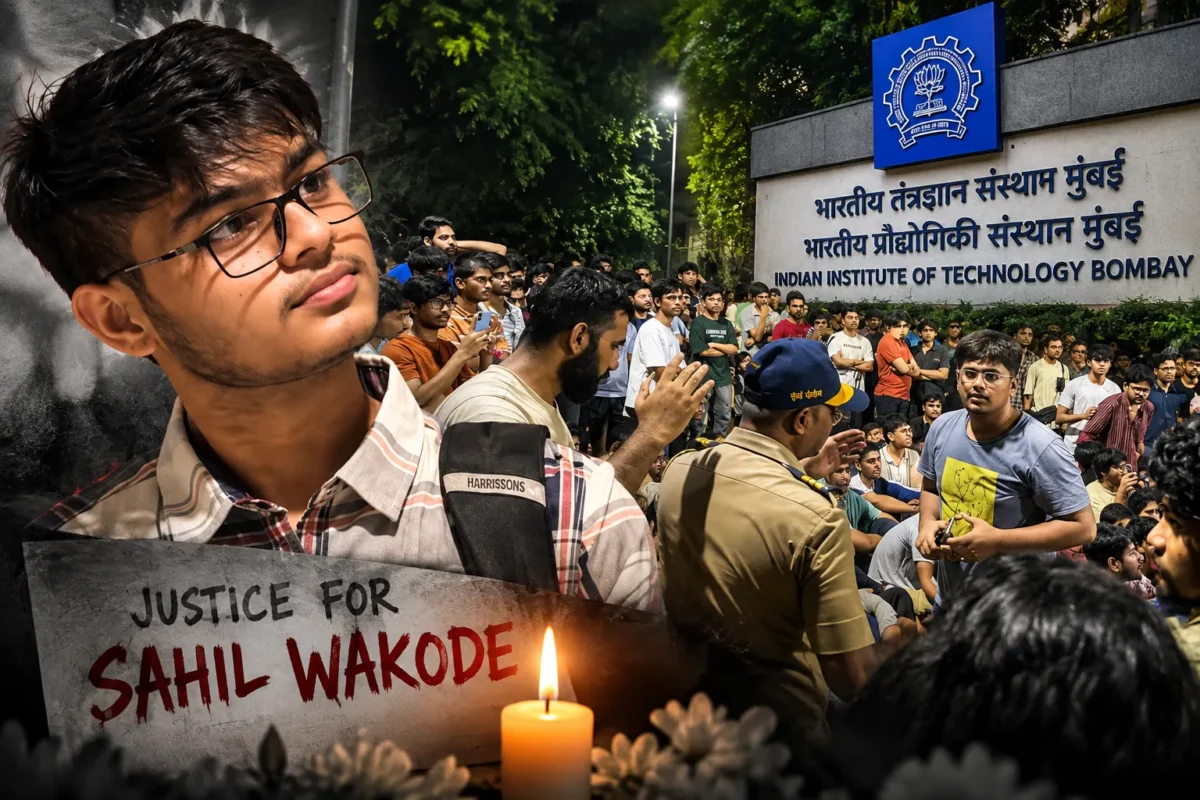


Dharmendra Pradhan’s resignation is the first unmistakable victory of the students’ movement. For the first time in over a decade, sustained public mobilisation has compelled the resignation of a Union Cabinet minister. In an era where public outrage, administrative failures and even serious allegations had rarely translated into ministerial accountability, this marks a significant political moment. The movement has demonstrated that organised democratic pressure can still extract concessions from a government widely perceived to be politically impregnable.
Yet every movement faces a paradox. Its first victory often becomes the beginning of its decline.
If the students believe that Pradhan’s resignation is the culmination of their struggle, they risk allowing the government to define both the scale and the limits of their success. The resignation of one minister, however important symbolically, does not by itself alter the political equilibrium.
The reasons are obvious.
The contemporary BJP derives its political legitimacy overwhelmingly from Narendra Modi. Most ministers do not possess an independent political constituency capable of materially affecting the government’s standing. Unless the public comes to associate the Prime Minister himself with the failures that produced the examination crisis, the resignation of an individual minister imposes only a limited political cost upon the regime.
Indeed, the government may well have calculated that sacrificing one minister is preferable to carrying an avoidable political liability into the Uttar Pradesh elections. This would not be unprecedented. Before the previous Uttar Pradesh Assembly elections, the Modi government withdrew the three farm laws after a prolonged agitation. Whether one agrees with that decision or not, it demonstrated a willingness to remove politically damaging issues before an electoral contest while preserving the authority of the larger leadership. Pradhan’s resignation may serve a similar purpose.
This is precisely why the movement cannot end here.
Its significance was never confined to the political fate of one minister.
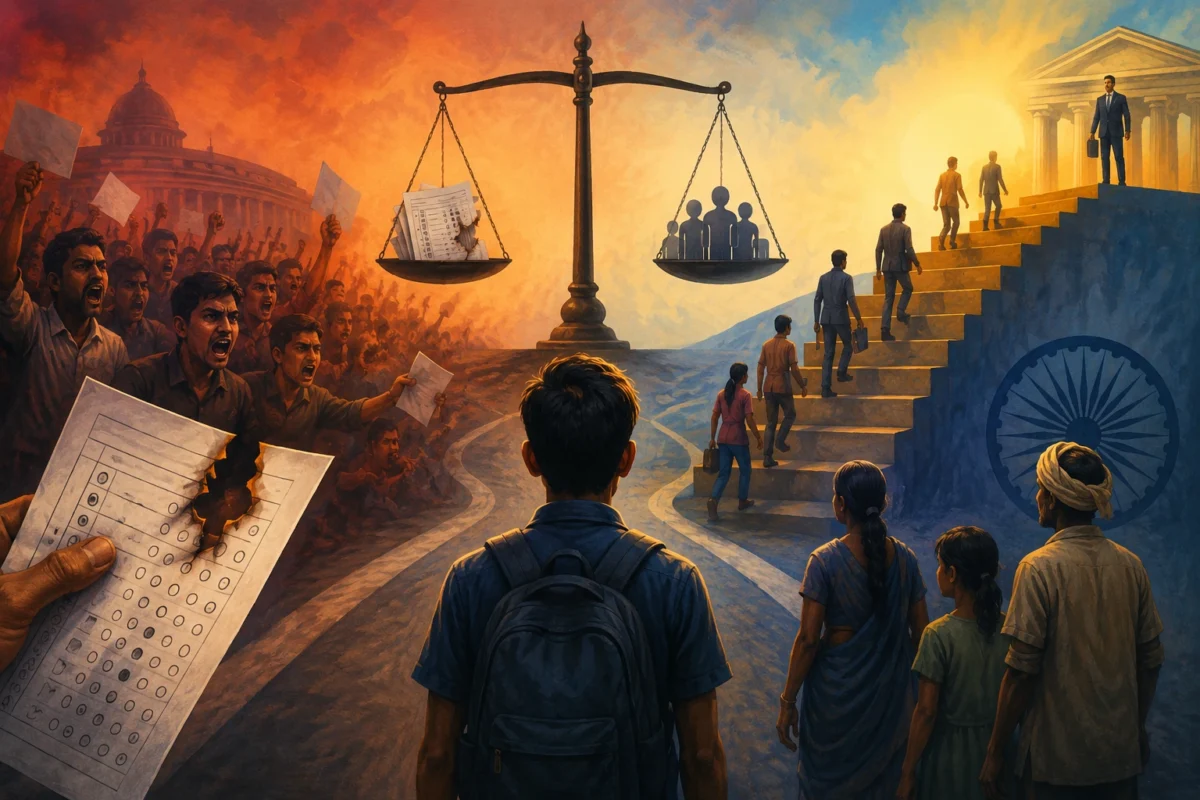
The examination crisis is only the visible manifestation of a much deeper structural crisis. Every leaked paper, every cancelled examination and every disputed recruitment assumes extraordinary importance because millions of young Indians confront an economy where secure employment has become increasingly scarce. Competitive examinations have become existential because employment itself has become existential.
The exam crisis is, fundamentally, an employment crisis.
Consequently, limiting the movement to procedural reforms in examination administration would be inadequate. Better examination systems, greater transparency and stricter accountability are all necessary. But they remain bureaucratic solutions. Bureaucratic reforms, however important, cannot by themselves sustain a democratic movement.
Politics requires a larger objective.
One possible direction would be to demand a comprehensive review of the institutional decisions taken during Dharmendra Pradhan’s tenure—particularly appointments and educational policies that remain politically contested. The argument would not be that every decision was necessarily illegitimate, but that a minister who has exited office under overwhelming political pressure cannot automatically leave behind an unquestioned institutional legacy. Democratic scrutiny of those decisions would therefore be both politically and constitutionally defensible.
More importantly, the movement must compel the country to confront the employment question itself. Until India addresses the scarcity of dignified employment, examination controversies will continue to recur because they are symptoms of the same structural problem.
But even compelling demands are insufficient without political organisation.
This movement has achieved something remarkable. It challenged a political atmosphere that many critics have described as being marked by fear and institutional intimidation. The students—perhaps because they had the least accumulated stake in the existing order—demonstrated a willingness to confront authority when many others hesitated. They restored to Indian politics the idea that organised democratic action can still produce results.
The question now is whether that courage can survive beyond the campuses.
Student movements possess immense moral authority but limited organisational permanence. Universities reopen. Students graduate. Protest camps disperse. Unless political institutions inherit and sustain the energy created by students, even the most successful movements eventually dissipate.
This organisational question has become even more pressing because several civil society platforms that initially occupied the protest space no longer appear capable of providing durable national leadership. Their engagement with the BJP over the years has diminished their credibility among many students. Whether that perception is entirely fair is less important than its political consequence: they are no longer in a position to command the confidence necessary for the movement’s next phase.
Someone else must now assume that responsibility.
Over the past week, the Congress has signalled a willingness to do so. From the march to Parliament and the dramatic dharna near the Prime Minister’s residence to Rahul Gandhi’s meeting with the students at Jantar Mantar, the party has demonstrated that it is prepared to convert parliamentary opposition into political mobilisation. Among opposition parties today, Congress remains the only formation capable of coordinating a nationwide campaign across states and social constituencies. If the movement is to survive beyond its first victory, it requires precisely that organisational capacity.
Yet the transition cannot be engineered by the Congress alone.
History offers an instructive lesson.
The movement that eventually came to be known as the JP Movement did not become a national democratic challenge while remaining merely a student agitation over campus grievances. It acquired a larger political purpose when the students of Bihar themselves invited Jayaprakash Narayan to lead the struggle and articulated the vision of Sampoorna Kranti. The legitimacy of that transition came not from a political party appropriating the movement, but from the students voluntarily expanding its political horizon.
The present movement stands at a similar crossroads.
Rahul Gandhi has already indicated his willingness to engage directly with the students. But if this movement is to become something larger than a successful protest, the initiative must come from those who created it. It must be the students who decide that their struggle has entered a new phase and invite organised democratic politics to carry it forward.
That is why the emerging student leadership assumes enormous importance. Voices such as Neha, who have earned legitimacy through participation rather than political office, occupy a uniquely significant position. They possess the moral authority to define the movement’s next chapter. If Neha and other student leaders conclude that the struggle has outgrown the campuses, they should say so openly. They should invite Rahul Gandhi and the democratic opposition to transform a students’ agitation into a broader national campaign for educational justice, employment and democratic accountability, while ensuring that the students themselves remain the movement’s moral centre.
Such an invitation would not diminish the movement’s independence. It would strengthen it. Political parties should derive legitimacy from citizens’ movements, not the other way around. The students would not be surrendering their cause to a party; they would be asking democratic politics to assume responsibilities that students alone cannot permanently discharge.
Dharmendra Pradhan’s resignation is therefore not the destination. It is the opening chapter.
The students have already demonstrated that fear can be challenged. Their next challenge is to ensure that courage does not dissolve into memory. If they succeed in transforming a successful protest into a sustained democratic movement, the resignation of one minister will be remembered not as the end of the story, but as the moment when a generation decided that it would no longer remain merely examined by the system—it would begin to examine the system itself.