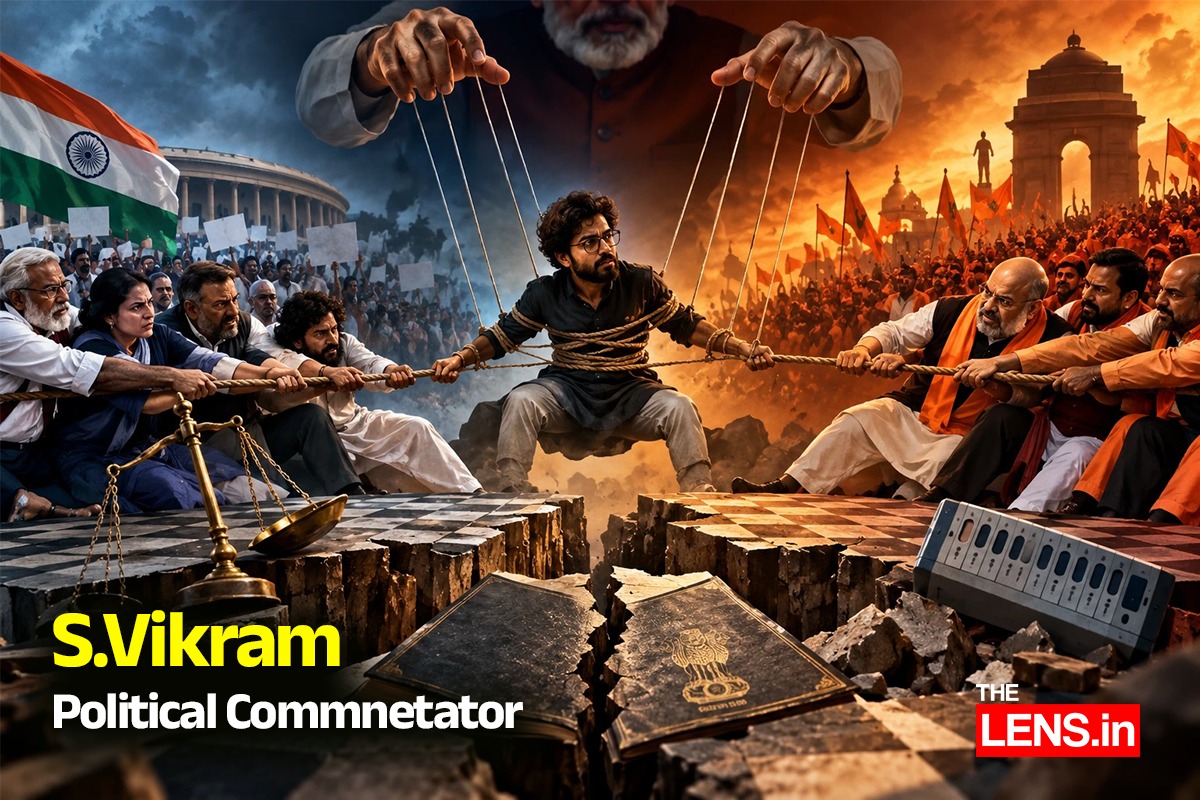
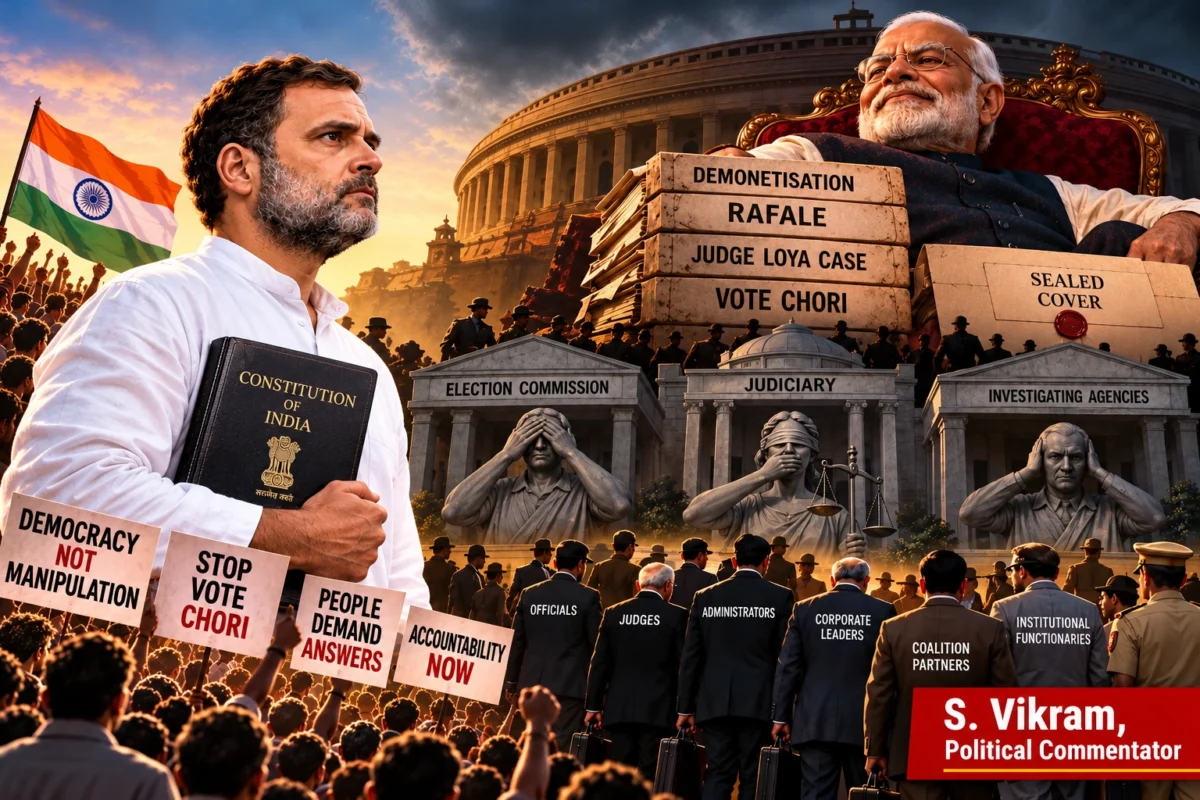
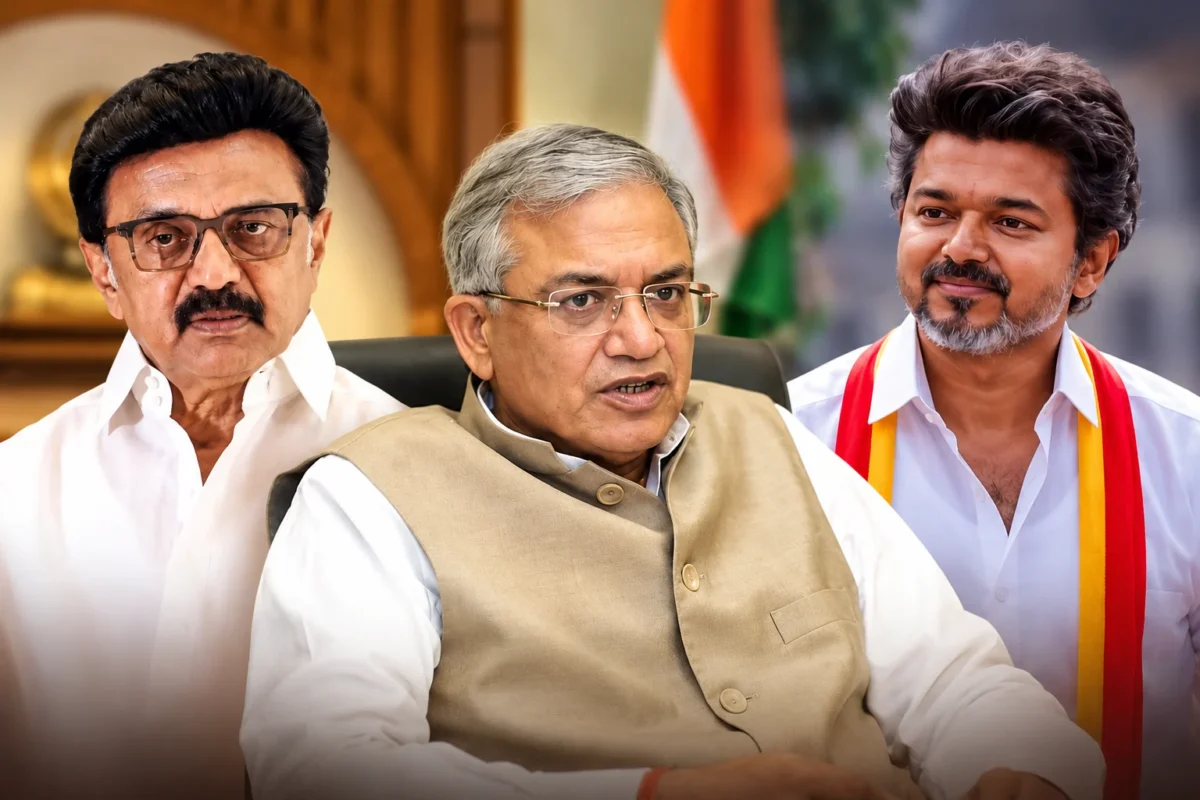
For the first time in its history, West Bengal has fallen to the Bharatiya Janata Party. The BJP won 207 of 293 seats, reducing Mamata Banerjee’s Trinamool Congress to 80, and sending Banerjee herself to defeat in her own Bhabanipur fortress. The scale of the result transformed India’s political map. But the result, and the manner in which it was produced, forces a reckoning with something deeper — not just the opposition’s electoral fortunes, but the philosophical foundations on which Indian parliamentary democracy has rested since 1950.
To understand what is happening, it helps to begin not with politics but with first principles.
The Three Postulates
Parliamentary democracy rests on three interlocking conditions without which the whole architecture collapses.
The first is consent of the governed minority. The minority — any minority — agrees to be ruled by the majority not out of submission, but out of trust. Trust that the institutions are impartial, that the process was fair, and critically, that the outcome is reversible. This consent is not unconditional. It is a continuously renewed social contract whose renewal depends entirely on the integrity of the institutions that guarantee it. The minority accepts an adverse election result because it believes the next election will also be genuinely contested. Remove that belief, and you remove the basis for consent.
The second is large political parties with grassroots membership. This condition is less discussed but equally foundational. Political parties are not merely electoral machines. They are the translation infrastructure of democracy — spaces where local grievance becomes national policy, where the street negotiates with the legislature, where communities that would otherwise have no voice find representation. When parties hollow out — through dynasty, through cadre desertion, or through top-down organisational discipline that bypasses internal deliberation — the dialogue function breaks. Communities do not disappear when their parties do. Their political voice does.
The third, and most philosophically acute, is the non-committed majority — the condition that ensures no minority is minority in perpetuity. The genius of electoral democracy is that it disaggregates identity. A voter is simultaneously a farmer, a woman, a resident of a particular district, a member of a caste, a language community, a faith. No single identity axis should permanently determine political outcomes. If one does, some communities find themselves structurally excluded from the majority coalition regardless of their political behaviour. For such communities, the first postulate breaks entirely: there is no rational basis to consent to majority rule when that majority is ontologically fixed against you.
These three conditions are not independent. They form a cascade. Destroy the parties, you lose the mechanism through which identities remain fluid and negotiable. Fix identities permanently along a single axis, you produce perpetual minorities. Perpetual minorities withdraw consent. The architecture does not necessarily collapse in dramatic revolution — more often, it hollows quietly, with the formal structures of democracy continuing as theatre while their substance is evacuated. This is the precise danger India faces in 2026.
Bengal and the Method of Conquest
Bengal was the last significant non-Dravidian state to resist the BJP’s advance. Its resistance was not merely organisational — it was ideological, rooted in a composite culture of Left politics, syncretic religious practice, and a deep bhadralok suspicion of Hindutva’s aesthetic and intellectual coarseness. That the BJP has now broken through is consequential beyond the seat count.
The reversal from 2024 is dramatic. In the general elections of that year, the BJP had actually dropped to 12 Lok Sabha seats from 18 in 2019, while the TMC went up from 22 to 29. Bengal looked like the one major state that could consistently resist. The turnaround in under two years is what makes this result politically earthquake-grade.
The Special Intensive Revision of electoral rolls — the SIR process — was first deployed in Bihar in 2025 before being extended to Bengal. In West Bengal, nearly 91 lakh voters were removed in two tranches: approximately 63 lakh in an initial round, and a further 27 lakh after judicial adjudication. The Election Commission maintained these were duplicate, deceased, or ineligible entries. The opposition argued that genuine voters — disproportionately from minority communities and Matua populations — were systematically removed.
The constitutional problem with the SIR is not merely the number of deletions. It is the structural logic of the process. The SIR inverted the normal presumption of electoral inclusion: instead of the state bearing the burden of proving ineligibility, the voter was required to re-establish eligibility. In a country with the literacy rates, mobility patterns, and administrative capacities of rural Bengal, this inversion is not procedurally neutral. It is politically targeted, whether by design or by foreseeable consequence.
The Supreme Court, when petitioned, relegated the matter to procedural compliance — treating a question of franchise as an administrative dispute. The Court’s role in a democracy is not merely to review procedure but to protect the conditions under which consent is possible. A court that treats the mass disenfranchisement of a specific demographic as a question of form-filling has abdicated that role.
Further anomalies compounded the concern. Parakala Prabhakar, former economic adviser to the Andhra Pradesh government, demonstrated statistically that during a window of approximately two hours on polling morning, the average time recorded per voter was 39 seconds — a figure that is, to put it plainly, implausible for any legitimate voting process. The Election Commission did not respond. Booth 164, with an 88 per cent Muslim population, reportedly recorded 97 per cent of votes for the BJP — an outlier that in any functioning institutional environment would trigger automatic scrutiny and explanation. It did not.
The Meenakshi Natarajan Template
If the Bengal process raised questions about electoral roll manipulation, the Meenakshi Natarajan case has established something qualitatively new: the weaponisation of nomination scrutiny to eliminate opposition candidates before the contest begins.
Natarajan’s Rajya Sabha nomination from Madhya Pradesh was rejected on the grounds that she had failed to disclose a court complaint in her affidavit. The complaint was a private one. She was not an accused. She had not been charged. She had only received a summons — a procedural step that precedes any finding of wrongdoing and in no ordinary legal or moral sense constitutes a disqualifying fact. The objection was filed by the BJP’s own competing candidate. The Returning Officer upheld it. The BJP proceeded to sweep all three Madhya Pradesh Rajya Sabha seats unopposed.
What makes this case distinctive, and why the opposition has responded to it with unusual unity, is its implications as a template. If a private complaint — not a charge, not a conviction, not even a formal case in which the candidate is named as accused — can constitute grounds for nomination rejection, then the mechanism for eliminating any opposition candidate is essentially unlimited. Any political actor with access to a magistrate’s court can, by filing a private complaint mentioning a rival’s name, create the conditions for that rival’s disqualification. The legal infrastructure of nomination becomes a weapon rather than a safeguard.
This is not a departure from the logic of what preceded it. It is the logical extension of a pattern: Surat 2024, the SIR in Bihar and Bengal, the use of central agencies against opposition chief ministers, the splitting of legislative parties through inducements the anti-defection law was designed to prevent. Each step, individually, can be represented as procedural compliance. In aggregate, they constitute a systematic dismantling of the conditions under which free electoral competition is possible.
The Disintegration of the Regional Satraps
The conventional wisdom through 2022 held that regional parties were more resistant to the BJP’s advance than the Congress. Rooted in local identity, patronage networks, and leaders with genuine mass bases, they seemed to offer what the weakened Congress could not: a credible local face for opposition. The experience of Maharashtra, Bihar, Andhra, and now Bengal has comprehensively inverted that assumption.
The BJP’s method reveals why. Regional parties, whatever their local resilience, are structurally vulnerable to a combination of central agency pressure on individual leaders, offers of protection and position to those who defect, and the use of institutional mechanisms — gubernatorial discretion, legislative party splitting, nomination scrutiny — that require central coordination to deploy. Against this method, the one thing that actually provides immunity is ideological clarity. Ideologically committed cadres have no personal incentive to defect even when their leaders do. The patronage networks that make regional parties electorally potent are precisely what makes them institutionally fragile.
The Congress, for all its organisational weakness, has demonstrated this immunity. Its workers do not defect to the BJP because the ideological distance is too great. Here lies the central paradox of the current moment: the party that was considered the weakest opposition actor has turned out to be the most structurally durable one. The regional satraps who were supposed to be the BJP’s most formidable opponents have proven to be its most tractable acquisitions.
The Opposition’s Forced Evolution
The political consequences of Bengal and Natarajan may, in a perverse way, accelerate the formation of a more coherent opposition than the INDIA alliance ever achieved. The case for a Congress-led umbrella is no longer merely ideological. It is, for the surviving regional parties, existential.
What emerges, if it emerges, will not look like the Congress of 1970 or even 2004. It will be more loosely federal — regional parties retaining their own identity, cadre, and local leadership while operating under a common political platform on questions of institutional integrity. The Congress would function less as a party in the old sense and more as an ideological and moral anchor: the entity that provides the movement’s legitimating narrative while the regional partners provide its organisational muscle.
This is historically resonant. The 1969–1977 Congress disintegration created an opposition ecosystem of regional parties. What is now underway is the potential reversal — crisis forcing re-aggregation, not around ideology necessarily, but around survival. The question is whether the leadership has the strategic patience to allow TMC, Left, and Shiv Sena cadres to function under a loose federal umbrella without demanding ideological conformity. That requires a different kind of politics than the Congress has historically practised.
The Natarajan case has helped this coalescing more than any single Rajya Sabha seat could have. It has provided a concrete, visible injustice that is difficult to dismiss as partisan grievance. A woman not even accused in a private complaint, disqualified from contesting an election on the basis of that complaint’s omission from her affidavit — the brazenness of it has done what years of argument about EVM tampering and agency misuse could not: produced a shared wound, publicly visible and morally unambiguous.
The Case for Direct Action
Parliamentary opposition assumes that the rules of the game are sufficiently intact that playing by them is not itself a form of complicity. When the nomination process can be weaponised, when electoral rolls can be revised to remove inconvenient voters, when the Election Commission does not respond to statistical anomalies and the Supreme Court treats franchise questions as administrative disputes — at some point, the assumption fails.
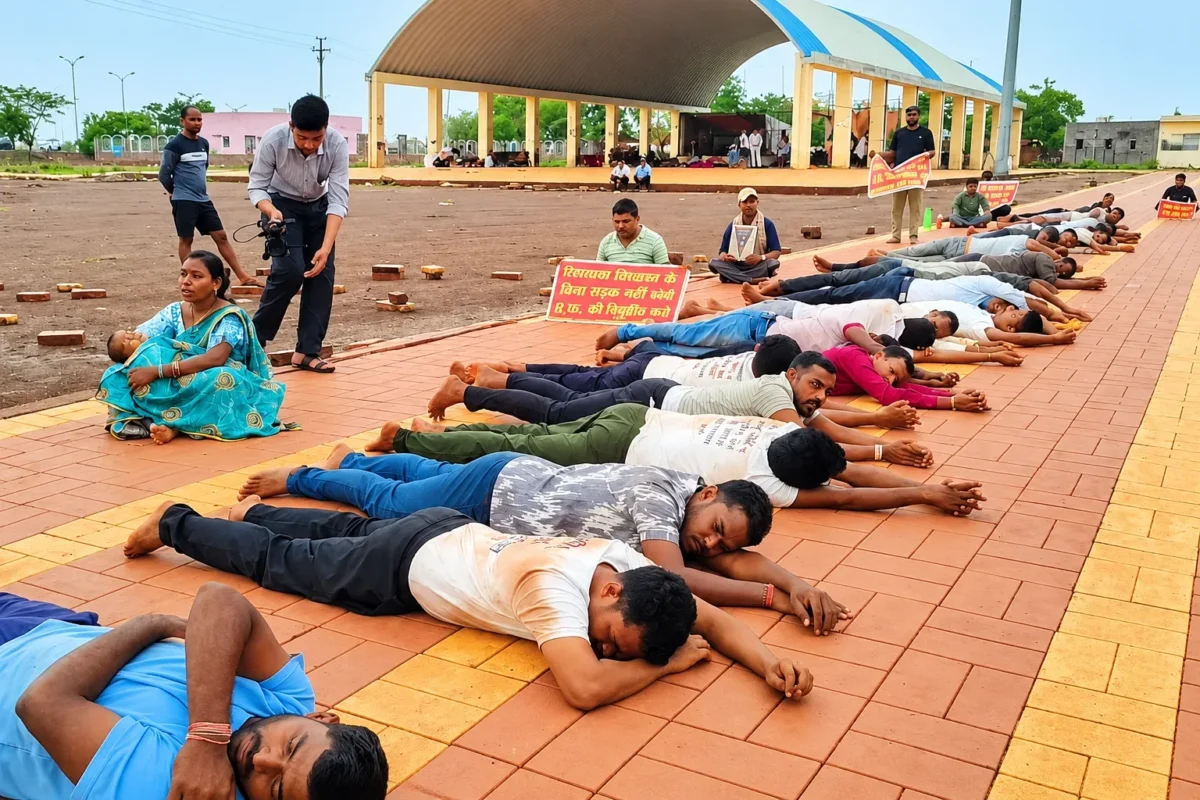
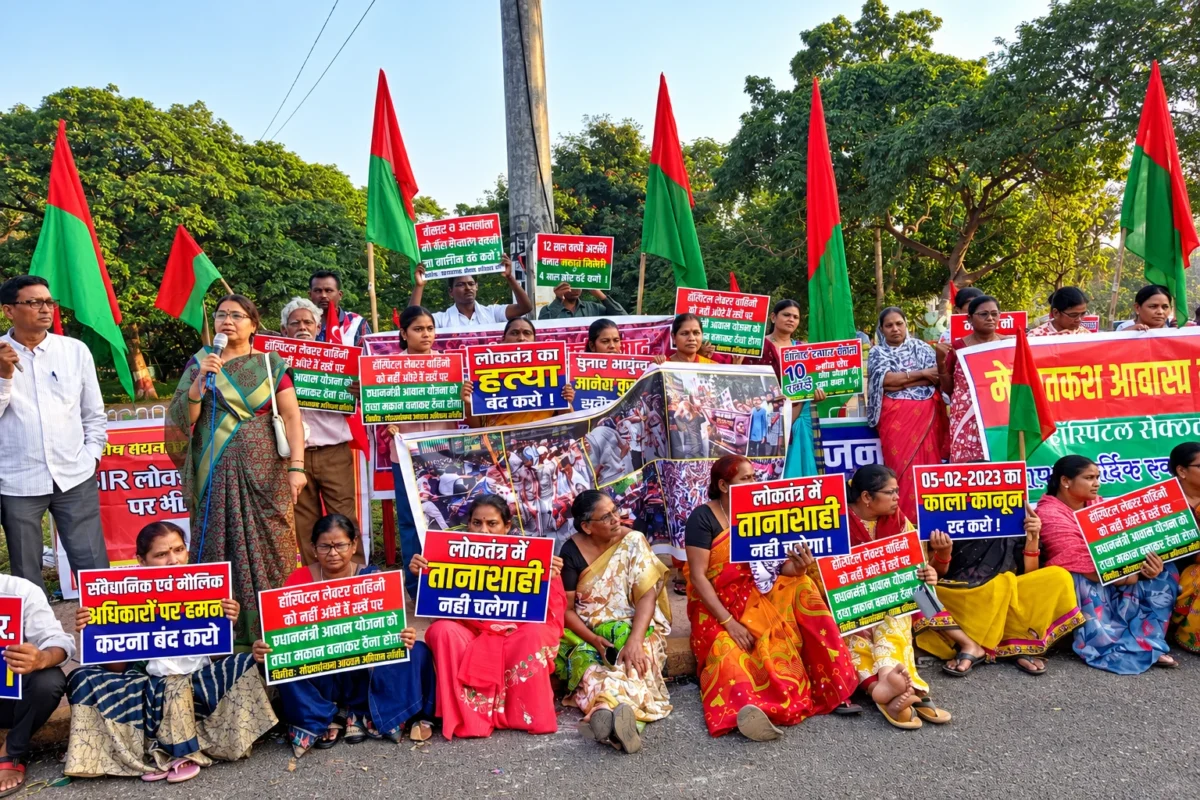
This is not an argument for abandoning parliamentary engagement. It is an argument for supplementing it with direct popular mobilisation — civil disobedience, mass demonstration, and the kind of moral pressure that historically has restored institutional integrity when the institutions themselves have been captured. The JP Movement of 1974 succeeded not because it won a parliamentary vote but because it made the illegitimacy of the Emergency viscerally visible to enough of the population that the cost of continuing it became prohibitive.
Such mobilisation requires two things that are now beginning to coalesce. The first is moral authority — a leader whose personal credibility is sufficient that the state cannot dismiss the movement as factional or self-interested. Rahul Gandhi, whatever his limitations as a parliamentary tactician, commands that moral authority in a way no other national opposition figure currently does. His consistency, his willingness to absorb institutional persecution without apparent personal compromise, and his ideological distance from the regime have given him a credibility that is not reducible to electoral arithmetic.
The second is street-fighting organisational capacity — the grassroots mobilisation infrastructure that can sustain a movement through state repression, economic disruption, and the inevitable attempts by non-state elements to provoke violence that would discredit the opposition. This is precisely what the TMC, the Left parties, and the Shiv Sena (Uddhav) bring. They are not ideologically proximate to the Congress. But they have the boots on the ground. Defeat has produced what years of negotiation could not: a genuine willingness to subordinate organisational ambition to a shared purpose.
The risk is real and should not be minimised. Direct action will bring confrontation with the state and with RSS-aligned groups. Normal life will be disrupted. Economic hardship, already considerable, will be aggravated. People will tolerate these disruptions — they have historically — only when they believe the cause is just and the leadership is clean. The moral authority is therefore not decorative. It is load-bearing. It is the only thing that can hold a movement to its restorative purpose and prevent it from becoming the thing it is fighting against.
What Is at Stake
Return, finally, to the three postulates.
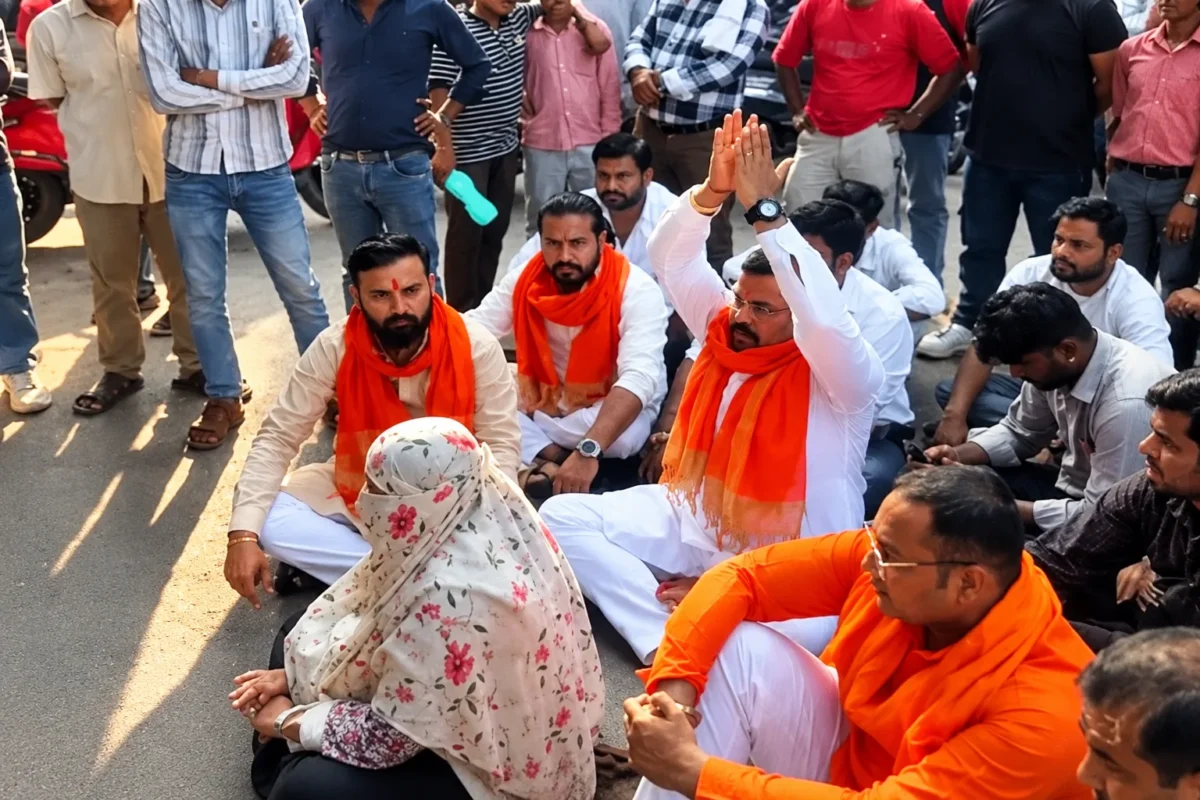
The BJP’s electoral strategy has worked, quite deliberately, to fix the Hindu-Muslim cleavage as the primary axis of Indian political competition. If that project fully succeeds, Muslims — 14 per cent of the population — become a perpetual minority in the precise constitutional sense: unable, by any act of democratic participation, to join the majority coalition. Their votes become structurally irrelevant. The first postulate then fails not through dramatic rupture but through quiet logical completion. A community permanently excluded from the majority has no rational basis to consent to majority rule.
The second postulate is undermined by the destruction of the regional parties and the hollowing of the BJP’s own internal democracy. The translation infrastructure between communities and the republic is being systematically dismantled. Communities without political voice do not become quiescent. They find other channels — some of them far more dangerous to social stability than a functioning opposition party ever was.
The movements that history records as having restored democratic integrity have rarely been durable. They did not need to be. They needed only to fight the immediate threat, restore the minimum conditions for fair competition, and then — crucially — disintegrate. Their disintegration, when it came, was not failure. It was the return of normal politics: competing interests, local satraps, ideological disagreements, factional struggles. That noise, that productive incoherence, is democracy. The large umbrella with competing local interests should, by design, break apart once the threat recedes — because in a healthy democracy, the diversity it temporarily suppressed is exactly what should reassert itself. The absence of that incoherence is the emergency.
The BJP has, in its drive toward unassailability, produced something it did not intend: a clarity about what is at stake. Bengal has closed one political chapter. Whether it opens another depends on whether the opposition can hold its moral centre through what comes next, and whether enough of the Indian polity still believes the postulates are worth fighting for.
The answer to that question will define the republic.