Sewer Deaths, Caste, the Swachh Bharat Fraud, and the Civilisational Failure India Will Not Name
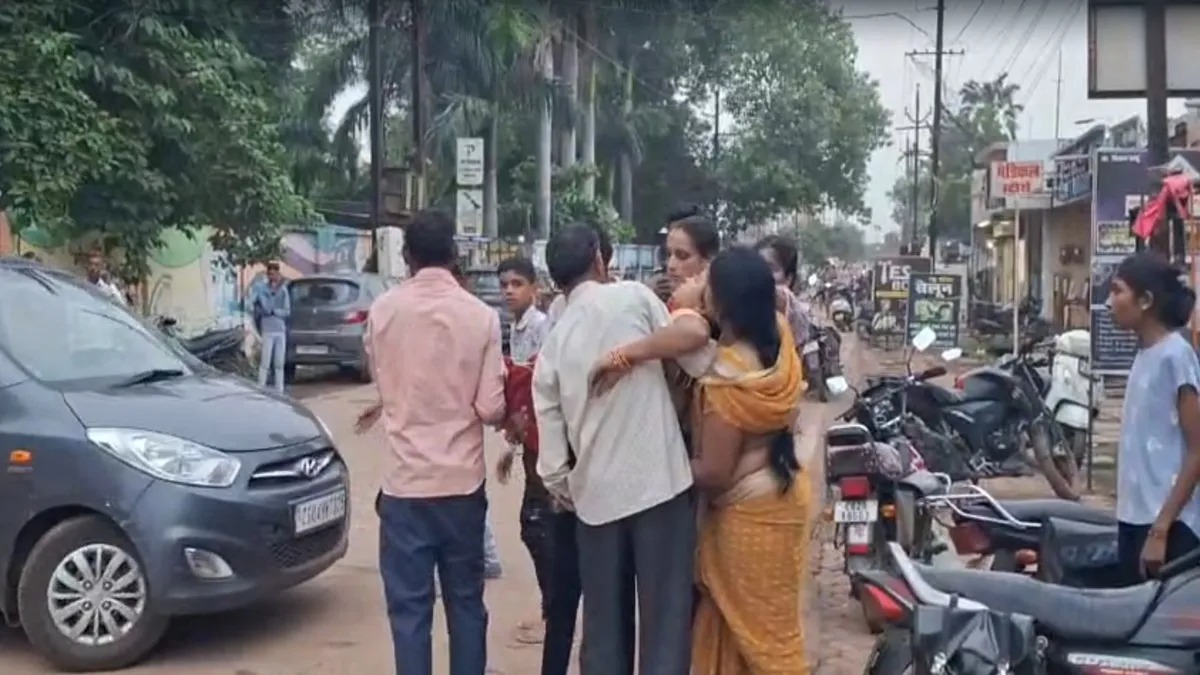
On March 18, 2026, three workers — Govind Sendre, Anmol Machkan, and Prashant Kumar — descended into a sewage tank at Ramkrishna Care Hospital in Raipur to clean it. They had no breathing apparatus. No protective suits. No gas-detection equipment. Workers in situations like theirs have historically tested the safety of such tanks by lowering a sparrow or a small animal first: if it returns alive, the methane concentration is survivable. Whether this was done in Raipur is unknown. What is known is that all three were unconscious within minutes and never recovered. After their deaths, their bodies were reportedly handled without dignity — loaded into a vehicle with the haste one reserves for refuse. Their families waited outside the hospital for answers. The management sent silence.
The Chief Minister of Chhattisgarh subsequently convened a high-level meeting and issued instructions: no septic tank cleaning without municipal permission, only trained workers, mandatory equipment. These instructions are substantially identical to the Supreme Court’s orders of January 29, 2025, which were themselves restatements of its orders in the Dr. Balram Singh case in 2023, which were themselves restatements of the Prohibition of Employment as Manual Scavengers and Their Rehabilitation Act of 2013, which was itself a strengthening of the original ban on manual scavenging passed in 1993. The state has been issuing the same instructions for thirty-three years. The workers have been dying throughout.
Between 2019 and 2023, the government informed the Rajya Sabha, 377 people died while cleaning sewers and septic tanks. In 2024 alone, at least 116 manual scavengers lost their lives. By mid-2025, 42 more had died in the first six months. These are confirmed, documented deaths — the actual toll, given the informality of employment arrangements and the reluctance of contractors and state agencies to report incidents, is certainly higher. The government’s response to these statistics, delivered to Parliament by Minister of State Ramdas Athawale, was: there is no report of the practice of manual scavenging currently in the country. Three hundred and seventy-seven people died doing something the government says does not exist.
The Caste Arithmetic of Death
The people who die in India’s sewers and septic tanks are not a random cross-section of the poor. They are overwhelmingly Dalit — specifically from the lowest sub-castes within the Dalit community, communities historically designated for sanitation work under the caste order. According to the National Commission for Safai Karamcharis, approximately 92 percent of sanitation workers belong to historically oppressed and marginalised communities. The NAMASTE scheme, which profiled 54,574 sewer and septic tank workers, found that 67 percent belonged to Scheduled Castes. These numbers confirm what lived experience has always known: this is not a labour market outcome. It is a caste outcome. The allocation of this specific, lethal work to specific caste communities is not coincidental. It is structural.
The economic logic reinforces the caste logic in a closed and self-perpetuating circuit. These workers are extremely poor. No alternative employment is available to them — not because none exists in the abstract, but because the same caste order that assigned them to sewage work has also excluded them from the labour markets where alternative employment might be found. Because their labour is so cheap — a contractor in Kerala, one study found, pays a worker around five hundred rupees to clean three or four manholes — no agency, public or private, has any financial incentive to invest in protective equipment or mechanical systems. The worker’s life costs less than the equipment that would protect it. The sparrow test — lowering a small bird into the tank to see if the methane concentration is lethal — is not an improvised folk solution. It is the industry standard for the poorest and least valued workers in Indian society, deployed by contractors who have calculated that a dead sparrow is cheaper than a gas detector.
The cleaning jobs have been outsourced almost universally. The state has abandoned permanent employment in sanitation, shifting the legal responsibility for worker safety onto an endless chain of contractors and subcontractors, each of whom can claim that the actual employer is someone else. When workers die, the Delhi Jal Board says the sewer is not in its jurisdiction. The contractor says the workers entered without authorisation. The hospital management, as in Raipur, says nothing at all. The Supreme Court has found affidavits from civic bodies to be, in its own words, cleverly worded to create a false impression of compliance. The system is designed to ensure that accountability, like the bodies of the dead, disappears without trace.
What the World Decided
The persistence of sewer deaths in India is not an inevitability of development economics. It is a choice — legible as a choice precisely because countries at comparable and lower levels of economic development have made different ones.
Malaysia offers the most instructive comparison. In the 1950s, Malaysian Chinese migrants were engaged in manual scavenging under conditions not unlike those in India today. The transformation was neither overnight nor driven primarily by activism or legal compulsion. Malaysia’s government decided to mechanise its sanitation sector because it wanted to develop a tourism industry, and a tourism industry requires infrastructure that does not rely on human beings descending into sewage. The government heavily subsidised the construction and maintenance of sewage treatment plants, conducted public education campaigns about septic tank maintenance, and gave citizens adequate time to adjust to tightened standards. The result: Malaysian sewer workers no longer enter tanks. The technology is standard. The economy that produced the political will for change was not dramatically wealthier than India’s — it was a government that decided its workers’ lives were worth the investment.
The nineteenth-century sanitary revolution in Europe offers an older and starker lesson. London’s Great Stink of 1858 — when the Thames became so putrid that Parliament itself was forced to evacuate — produced the political will for Joseph Bazalgette’s sewer system, one of the great feats of Victorian engineering. The driving force was not philanthropy toward the poor who lived near the river. It was the stench reaching the noses of the powerful. Paris built its modern sewer system for similar reasons. The historical research is unambiguous: sanitation infrastructure in the developed world was built when the consequences of its absence became impossible for the ruling classes to ignore or insulate themselves from. In India, the consequences fall entirely on people who have no political voice and whose bodies the state does not see. The stench stays in the slum. Parliament has no reason to notice.
What Korea and the Philippines demonstrate is that citizen demand — when mobilised through legal challenge and public awareness — can force the state to invest in infrastructure it would otherwise ignore. In the Philippines, civil society groups took Manila Bay’s contamination to the Supreme Court and won, producing independent performance monitoring of wastewater management. In Korea, public concern over river quality drove demand for investment in sewage treatment that the government then funded. In India, the Safai Karmachari Andolan has been litigating manual scavenging deaths before the Supreme Court for decades and winning — repeatedly — without the victories translating into compliance. The court orders are issued. The affidavits are filed. The workers continue to die. The gap between court order and ground reality in India is not a legal gap. It is a civilisational one.
The Swachh Bharat Fraud
The Swachh Bharat Mission, launched in 2014 and prosecuted as a flagship programme of this government, requires particular examination in this context. The mission constructed toilets — hundreds of millions of them, according to its own figures — and dramatically expanded individual household sanitation. It created the infrastructure for urban Indians to stop defecating in the open. What it did not create, and what it had no imagination for, was the system for safely managing the waste those toilets produce.
Open defecation, whatever its other problems, produced waste that underwent natural decomposition in the open air, sun-dried before it required handling, and was dispersed across land rather than concentrated in sealed tanks filled with lethal gas. The individual septic tank — the primary sanitation solution deployed under Swachh Bharat where sewerage connections were unavailable — concentrates human waste in a sealed, anaerobic environment where methane and hydrogen sulphide accumulate to fatal concentrations. It then requires periodic emptying by a human being who must enter or lean into that environment. As your analysis notes with precision: this is worse than manual scavenging. Manual scavenging of dry latrines, which Swachh Bharat was meant to eliminate, involved the handling of dried, partially decomposed waste. Septic tank cleaning involves descent into a chamber of toxic gas.
The Wire’s investigation found that with the introduction of Swachh Bharat, the sanitation movement in India was rendered caste-less. The framing of sanitation as a matter of individual hygiene and toilet access — embodied by Modi’s broom and the imagery of clean streets — deliberately obscured the labour that produces cleanliness. It made visible the toilet and invisible the person who empties it. It branded cleanliness as a national virtue and refused to confront the caste system that makes cleanliness possible for those at the top by making it lethal for those at the bottom. The mission has a budget. The workers have the sparrow.
The government has abandoned city-level sewerage systems. The Parliamentary Standing Committee on Urban Development found in 2021 that 60 percent of Urban Local Bodies still depend on manual labour for sewer cleaning. The NAMASTE scheme — the National Action for Mechanised Sanitation Ecosystem — has a budgetary outlay of 350 crore rupees over three years to benefit approximately one lakh workers. This works out to roughly 35,000 rupees per worker per year to mechanise a system that kills them. For comparison, the Swachh Bharat Mission approved 371 crore rupees specifically for the eradication of manual scavenging while spending vastly more on toilet construction and the public communication around it. The branding budget has consistently exceeded the worker safety budget. This is a political choice, not a resource constraint.
The Civilisational Verdict
What happened in Raipur on March 18, 2026, is not an aberration. It is not a failure of enforcement, though it is that too. It is the logical and predictable outcome of a socioeconomic system that has decided, across thirty-three years of legislation, court orders, and government schemes, that certain lives are not worth the price of a gas detector.
Civilisation, as argued elsewhere in this series, rests on two foundational postulates: respect for life and respect for knowledge. The sewer deaths of India fail both simultaneously. They fail respect for life in the most direct possible way — workers are sent into lethal environments without protection because the cost of protection exceeds the value the system places on their lives. They fail respect for knowledge in the structural sense: the knowledge that these deaths are preventable, that the technology exists, that Malaysia, Korea, and dozens of other countries have solved this problem, that the Supreme Court has ordered its solution more times than can be counted — all of this knowledge is present, documented, and ignored. The ignorance is not ignorance. It is contempt.
The caste dimension makes the contempt specific. These are not workers dying because sanitation is inherently dangerous. They are Dalit workers dying because sanitation has been assigned to them by a caste order that the Indian state has lacked the political will to dismantle, and because the cheapness of their labour under that order makes their deaths economically rational for the contractors, hospitals, municipalities, and governments that employ them. India has a constitution that abolishes untouchability. It has a Supreme Court that has, repeatedly and in unambiguous language, declared these deaths unconstitutional. It has technology — the Bandicoot robot, developed by an Indian startup, already deployed in Kerala and Tamil Nadu — that can replace human entry into manholes entirely. It has the example of countries that have made this transition without extraordinary wealth.
What India does not have, in sufficient quantity, is the collective conscience to demand that it happen. The Raipur hospital management did not go to the families because it calculated, correctly, that it would not need to. The contractor sent workers in without equipment because it calculated, correctly, that the cost of compliance exceeded the cost of the deaths. The Chief Minister convened a meeting and issued instructions because a story reached the papers, knowing, from three decades of precedent, that the instructions would not be implemented until the next story.
Govind Sendre, Anmol Machkan, and Prashant Kumar descended into a tank of poisonous gas because India decided that their lives were worth less than the cost of a detector that would have told them not to. That decision was not made on March 18, 2026. It has been renewed, quietly and consistently, every day for thirty-three years. The question is not whether the state has failed these workers. The question is whether the society that the state represents is willing, finally, to stop renewing it.
─────────────────────────────────